Nos artigos que se seguem apresentaremos os inícios da história do budo moderno. (...) O kendo foi o modelo de referência onde se inspiraram as outras formas de budo, nomeadamente o karaté. Assim, começaremos pela vida de dois mestres que desempenharam um papel muito importante na formação do budo moderno. Já antes falámos nos artigos precedentes de um famoso combate que os opôs, são eles Takano Sazaburo et Naîto Takaharu.
Cronologia dos anos 1860-1880
Quando começa esta história, em 1879, o kenjutsu – que tinha conhecido um período de grave crise durante a modernização do Japão nos anos da década de 1870 - ressurge. Os torneios de kenjutsu, dedicados em muitas regiões aos deuses dos templos locais, voltam a ser populares em todo o Japão.
Muitos mestres de artes marciais, que irão ser a cara do budo moderno, nascem no decurso dos anos 1860-1880:
1860 : Nascimento de Jigoro Kano.
1862 : Nascimento de Sazaburo Takano e de Takaharu Naîto.
1866 : Nascimento de Kentsu Yabu.
1868 : Nascimento de Gichin Funakoshi.
1870 : Nascimento de Choki Motobu.
1871 : O reino de Ryukyu já unido ao Japão, recebe um título Senhorial de Ryukyu.
1875 : O Japão obriga a entidade Senhorial de Ryukyu a romper com a China.
1877 : Jigoro Kano inicia-se no jujutsu.
1879 : Nascimento de Ueshiba Morihei.
1879 : Okinawa torna-se província, depois da abolição da entidade Senhorial de Ryukyu, a última do Japão.
1882 : Fundação do Kodokan-judo por Jigoro Kano.
1883 : Fundação do dojo Shumpukan por Tesshu Yamaoka.
1885 : Nascimento de Chôshin Chibana.
THE ESTABLISHMENT OF KENDO: SAZABURO TAKANO’S YOUTH
In the articles that follow we’ll present the beginnings of modern budo’s history. (…) Kendo was the reference model where the other forms of budo got the inspiration from, like karaté, for example. So, we’ll start by talking about the lives of two masters who played an important role in the establishment of modern budo. We already spoke, in previous articles, about their famous fight, they are Takano Sazaburo et Naîto Takaharu.
Chronology of events between 1860-1880
When our story begins, in 1879, kenjutsu - that had gone through a period of serious crisis during Japan’s modernization, in the years of the 1870’s decade – reappears. Kenjutsu tournaments, wich were, in lots of regions, dedicated to the gods of local temples, become popular all over Japan.
Many martial arts masters, who later will be the faces of modern budo, were born between the years 1860-1880:
1860 : Jigoro Kano is born.
1862 : Sazaburo Takano and Takaharu Naîto are born.
1866 : Kentsu Yabu is born.
1868 : Gichin Funakoshi is born.
1870 : Choki Motobu is born.
1871 : The kingdom of Ryukyu already part of Japan, receives a seigneury title.
1875 : Japan forces the Ryukyu seigneury to break with China.
1877 : Jigoro Kano starts jujutsu.
1879 : Ueshiba Morihei is born.
1879 : Okinawa becomes a province, after the termination of the Ryukyu seigneury, the last one in Japan.
1882 : Establishment of the Kodokan-judo by Jigoro Kano.
1883 : Establishment of the Shumpukan dojo by Tesshu Yamaoka.
1885 : Chôshin Chibana is born.
20.1.05
REFLEXÃO SOBRE O BUDO: ESTUDO A PARTIR DO KENDO (FIM)
Este é o último artigo sobre o relacionamento do budo com o kendo. No próximo artigo falaremos, entre outras coisas, da juventude Sazaburo Takano. Até lá visitem http://www.tokitsu.com, vão ver que vale a pena.
Pouco sucesso no tachigiri
Entre os discípulos de Yamaoka Tesshu (1836-1888), apenas alguns conseguiram superar as três provas do tachigiri e obter o menkyo-kaîden. Um deles, chamado Hasegawa, conseguiu mesmo realizar o tachigiri de sete dias mas não foi bem sucedido e foi apenas já no seu leito de morte que recebeu de Tesshu o tão desejado título.
Já aqui foi antes referido o nome de Sazaburo Takano (1862-1950), um dos raros discípulos que superou os tachigiri. “Forjado” pelo sabre de Tesshu, é um dos mestres que marcou o kendo do início do século XX. A famosa frase: “Não ganhes depois de atacar, ataca depois de ter ganho.” é sua. É mais elucidativa ainda se a relacionarmos com a “fórmula” de Tesshu: “A espada não existe fora do espírito.” (shin gaï muto), que me parece simbolizar a sua arte.
A partir do próximo artigo, veremos como os adeptos do kendo da primeira geração praticavam a sua arte.
CONSIDERATIONS ABOUT BUDO: A STUDY FROM KENDO (END)
This is the last article about the relationship between budo and kendo. In the next article we’ll talk, among other things, of Sazaburo Takano’s youth. Until then, go to http://www.tokitsu.com.
Few succeeded at tachigiri
Among Yamaoka Tesshu’s (1836-1888) disciples, only a few manage to accomplish the three tachigiri tests and received the menkyo-kaîden. One of them, called Hasegawa, manage to go through the seven days tachigiri, but wasn’t completely successful and was only when he was about to die that he received, from the hands of Tesshu, the menkyo-kaîden title.
The name of Sazaburo Takano (1862-1950) has already been mentioned here before, and he was one of the few who successfully overcame the three tachigiri. “Forged” by the sword of Tesshu, he is one of the masters who left is mark on the beginning of the XX century’s kendo. The famous phrase: “Don’t win after hitting, hit after winning” it’s his. It’s even more elucidative if we relate it with Tesshu’s “formula”: “The sword doesn’t exist outside the spirit.” (shin gaï muto) that, it seems to me, symbolizes his art.
Starting next article, we’ll see how the kendo adepts of the first generation used to practice their art.
Pouco sucesso no tachigiri
Entre os discípulos de Yamaoka Tesshu (1836-1888), apenas alguns conseguiram superar as três provas do tachigiri e obter o menkyo-kaîden. Um deles, chamado Hasegawa, conseguiu mesmo realizar o tachigiri de sete dias mas não foi bem sucedido e foi apenas já no seu leito de morte que recebeu de Tesshu o tão desejado título.
Já aqui foi antes referido o nome de Sazaburo Takano (1862-1950), um dos raros discípulos que superou os tachigiri. “Forjado” pelo sabre de Tesshu, é um dos mestres que marcou o kendo do início do século XX. A famosa frase: “Não ganhes depois de atacar, ataca depois de ter ganho.” é sua. É mais elucidativa ainda se a relacionarmos com a “fórmula” de Tesshu: “A espada não existe fora do espírito.” (shin gaï muto), que me parece simbolizar a sua arte.
A partir do próximo artigo, veremos como os adeptos do kendo da primeira geração praticavam a sua arte.
CONSIDERATIONS ABOUT BUDO: A STUDY FROM KENDO (END)
This is the last article about the relationship between budo and kendo. In the next article we’ll talk, among other things, of Sazaburo Takano’s youth. Until then, go to http://www.tokitsu.com.
Few succeeded at tachigiri
Among Yamaoka Tesshu’s (1836-1888) disciples, only a few manage to accomplish the three tachigiri tests and received the menkyo-kaîden. One of them, called Hasegawa, manage to go through the seven days tachigiri, but wasn’t completely successful and was only when he was about to die that he received, from the hands of Tesshu, the menkyo-kaîden title.
The name of Sazaburo Takano (1862-1950) has already been mentioned here before, and he was one of the few who successfully overcame the three tachigiri. “Forged” by the sword of Tesshu, he is one of the masters who left is mark on the beginning of the XX century’s kendo. The famous phrase: “Don’t win after hitting, hit after winning” it’s his. It’s even more elucidative if we relate it with Tesshu’s “formula”: “The sword doesn’t exist outside the spirit.” (shin gaï muto) that, it seems to me, symbolizes his art.
Starting next article, we’ll see how the kendo adepts of the first generation used to practice their art.
VISITANTES EGOÍSTAS???
Então, tanta gente que por aqui passa e ninguém deixa um comentáriozinho? Nada? Ninguém tem nada a comentar? Criticar? Sugerir? Vá lá malta, um bocadinho de feed-back sabe sempre bem. Ao menos, digam que é uma grande merda. Ou não...
SELFISH VISITORS???
So, so many visitor passing by and nobody leaves a little comment? Nothing? None of you has nothing to say? To criticise? Sugest? Come on people, a little feedback is always nice. At least, say you find this a big shit. Or not...
SELFISH VISITORS???
So, so many visitor passing by and nobody leaves a little comment? Nothing? None of you has nothing to say? To criticise? Sugest? Come on people, a little feedback is always nice. At least, say you find this a big shit. Or not...
19.1.05
REFLEXÃO SOBRE O BUDO: ESTUDO A PARTIR DO KENDO (III)
Para melhor ilustrar o que era o seïgan-tachigirigéïko, apresentamos agora um relato, feito na primeira pessoa, por um aspirante ao título de menkyo-kaîden. Mil e quatrocentos combates ao longo de sete dias. Este texto foi obtido e traduzido, com autorização do autor, sensei Kenji Tokitsu, em http://www.tokitsu.com.
Um exemplo de “tachigiri”
“No primeiro dia de Abril, às seis horas da manhã, a minha prova começou... os meus adversários, cerca de dez, seguiam-se um após outro, cada um combatendo até se sentir exausto. Quando um se cansava, um outro tomava o seu lugar e eles rodavam nas suas posições como uma roda que gira sem cessar. Eu estava em muito boa forma no primeiro dia e executei mesmo alguns “kumiuchi” (corpo a corpo) com violência. Tendo colocado o men de manhãzinha, não o retirei senão quando atingi o final. Quando os cordões se afrouxavam, os outros vinham imediatamente apertá-los, para que eu não pudesse ter um único momento de descanso. Descansei apenas por alguns momentos depois da refeição do meio-dia. Quando terminei os duzentos combates, por volta das cinco e meia da tarde, disse a mim próprio que seria capaz de repetir essa experiência durante sete dias. Mas combater durante onze horas, durante todo um longo dia de Primavera, é muito duro.
Entre os discípulos, um mais antigo chamado Murakami Masatada, observava todos os combates. Veio dizer-me, quando eu me repousava em casa, que a qualidade dos combates não tinha sido suficiente. “O mestre não está satisfeito. É preciso que combata com muito melhor, amanhã.” Prometi-lhe que combateria muito mais bravamente no dia seguinte. Soube depois que tinha dito a mesma coisa a todos os meus adversários. No segundo dia comecei igualmente às seis horas da manhã. Tal como tinha prometido a Murakami Masatada na véspera, tentei arrasar todos os meus adversários o mais bravamente possível, quer através de golpes, quer através de projecções. Mas cada um dos dez discípulos voltava bem descansado, um após outro. Não podia depender senão do meu shinai. O suor corria sem que o pudesse limpar e comecei a sentir uma grande sede. A hora da refeição chegou e pude então descansar um pouco. Mas não consegui almoçar, limitei-me a engolir dois ou três ovos.
Depois do descanso recomecei os combates, mas senti uma enorme fatiga e não me conseguia mexer como de manhã. Não me deixei sucumbir e consegui terminar os meus combates ao fim do dia. Sentia já dores por todo o corpo. No vestiário não consegui dobrar as pernas. Voltei para casa tentando suportar as dores. Deitei-me sem me preocupar com a minha saúde, uma vez que investia toda a minha vida. Só pensei na maneira como iria enfrentar a prova no dia seguinte. No terceiro dia apresentei-me no dojo dando-me coragem. Os meus adversários tinham o ar de quem já estava à minha espera há muito tempo.
Enquanto mudava de roupa sem demora, apercebi-me que murmuravam acerca do meu estado de sofrimento. Mas (depois) seguiram-se uns atrás dos outros violentamente, sem se incomodar com a minha condição, encorajando-se mutuamente com gritos. Tentavam desencorajar-me tanto através de “taîatari” (empurrões, na falta de melhor tradução) como através de kumiuchi.
As dores e o sofrimento eram indescritíveis mas disse-me que, uma vez que tinha investido ali a minha vida, não desistiria, mesmo que morresse. Nesse dia, para além dos dez discípulos, os praticantes mais antigos do dojo faziam também parte dos meus adversários. E cada um deles fez cinco combates contra mim. Ao meio-dia come-se a refeição. Eu contentei-me a descansar, sem conseguir comer nada. Depois, os combates recomeçaram como de manhã. O meu cansaço era tal que a minha consciência flutuava. Tendo perdido o ânimo, fiz o resto dos combates à defesa.
A minha visão estava obscurecida e quase que perdia a consciência. Pensei: “É aqui o lugar da minha morte”. Foi então a vez de um praticante que era sempre muito agressivo. Uma grande cólera apoderou-se de mim e bati-me com toda a força, dizendo para comigo: “Vem, não acabarei sem antes te partir a cabeça.” Nesse estado, esqueci as dores, pois estava cheio de vontade de destruir o meu adversário. No momento em que lhe ia rachar a cabeça, quando elevava o meu shinai, esquecendo-me completamente do meu corpo, o mestre gritou, com uma voz forte, que parasse. Fiquei muito perturbado com esse combate, sem compreender porque razão o mestre me tinha feito parar.
Obedeci, mas já passava das cinco horas e eu ainda não tinha terminado os meus duzentos combates do dia. Queria continuar a combater. O mestre ordenou-me que parasse, eu segui a sua ordem. Ao parar, o meu espírito relaxou-se, senti grandes dores por todo o corpo e não podia fazer nada. Depois de um curto repouso, consegui, com grande esforço, voltar para casa. Não foi como na véspera. Só com a ajuda da minha esposa é que consegui deitar-me. Não consegui dormir um segundo durante toda a noite.
Na manhã do quarto dia, não conseguia efectuar um só gesto e só me levantei da cama com a ajuda da minha mulher. Foi-me impossível tomar o pequeno-almoço. Pensava apenas na maneira como poderia conseguir efectuar os combates desse dia. Nessa manhã chovia. Mas como não conseguia segurar num guarda-chuva, coloquei uma capa por cima da cabeça e cheguei ao dojo com um andar tremido. O mestre já estava à minha espera e perguntou-me: “Como estás?”. Respondi-lhe calmamente, tentando dissimular as dores que atravessavam todo o meu corpo: “Quero continuar.” Então, o mestre disse: “Tu paras.” Não podia fazer outra coisa senão obedecer-lhe...”
Tesshu estava convencido que Kagawa morreria se ele o deixasse continuar.
CONSIDERATIONS ABOUT BUDO: A STUDY FROM KENDO (III)
In order to illustrate what seïgan-tachigirigéïko really was, we present here the testimony written by a kendoka aspiring to achieve the menkyo-kaîden title. One thousand, four hundred combats during seven days. This artcle was obtained and translated, with the authorization by the author, Kenji Tokitsu sensei, at http://www.tokitsu.com.
An example of “tachigiri”
“On the first day of April, at six o’clock in the morning, my test began… my adversaries, about ten, followed one after the other, each one fighting until he was exhausted. When one was tired, another one would take his place and they’d change their positions like a wheel spinning constantly. I was in very good shape that day and so I even did some “kumiuchi” (close conbat) with violence. I put on my men first thing in the morning and I only took it off in the end. Everytime the cords got loose, the others imediately tied it firmly, so that I could not rest. I only rested a few moments after the twelve o’clock meal. Once I finished the two hundred combats, round about half past five in the afternoon, I said to myself I could repeat that experience for seven days. But fighting for eleven hours, during a whole long spring day is a hard thing to do.
Among the disciples, an older one called Murakami Masatada, observed every fight. He came to my place, while I rested, and told me that the quality of of the combats hadn’t been good enough. “The master is not satisfied. You must do much better, tomorrow.” I promised him I would fight much bravely on the next day. I later knew that he said the same thing to all my adversaries. The second day also started at six in the morning. Like I promised Murakami Masatada the day before, I tried to smash all my opponents the most bravely I could, using strikes but also throwing them. But each one of the ten will return well rested, one after the other. I could only depend upon my shinai. The sweat kept flowing without me being able to clean it and I started to feel thirsty. Lunch time came and I was glad to rest a little. But I couldn’t eat, so I just swallowed two or three eggs.
After the break I restarted the combats, but I felt a deep fatigue and wasn’t capable of moving like I did in the morning. I didn’t succumb and managed to to finish all my fights by the end of the day. While in the dressing room I couldn’t bend my knees. I went home trying to deal with the pain. I went to bed without concerns about my health, since it was my life I was investing in this process. I just tried to figured out how I was going to face things in next day. On the third day I entered the dojo encouraging myself. My adversaries looked like they were waiting for me for a long time. While changing, I realized they were mumbling about my pain and suffering. But (after that) they followed, one after the other, violently against me, without bothering about how I was, encouraging each others by shouting loudly. They tried to descourage me not only by using
“taîatari” (pushing), but also kumiuchi techniques.
The pain and the suffering were hard to describe, but I told myself, once I had invested all my life in this, I would not give up, even if it killed me. That day, other than the ten disciples, the ancient students were also my adversaries. And each one of them made five combats against me. By mid-day one eats our meal. I was happy to rest only, because I didn’t manage to eat anything. After that, the fights restarted. I was so tired that, at times, my conscience floated. Having lost my valiancy, I did the rest of the fights just defending myself.
My vision was blured and I almost lost conscience. I though: “This is the place of my death.” By then, it was time to face a student known to be aggressive and mean. A great fury took over me and I fought harder, while telling myself: “Come on, I won’t finish here without smashing your head.” In such state of mind, I even forgot the pain, I just wanted to destroy my adversary. When I was about to crack is head wide open, while my shinai was already lifted and my body completely forgotten, the master shouted, with a strong voice, ordering me to stop. I was deeply distressed by that fight, and didn´t understand why he made me to stop.
I obeyed his order, but it was now after five o’clock and I hadn’t finished the two hundred fights of the day. I wanted to keep on fighting. The master ordered my to stop, so I followed his order. As soon as I stopped, my spirit relaxed itself, I felt an enourmous pain all over my body and there was nothing I could do about it. After a short rest, I managed to get home with great effort. But it wasn’t like the day before. Only with my wife’s help was I able to lie down in my bed. I didn’t sleep one second during the night. The morning of the fourth day I wasn’t capable of one single gesture and only got up thanks to my wife’s help. It was impossible to eat my breakfast. My only thoughs were about the combats that day. It was raining, that morning. As I couldn’t hold an umbrella I just put a cloth over my head and I arrived at the dojo with my legs shaking. The master was already waiting for me and he asked: “How are you?” I answered calmly, while trying to hide the pain that was going through my entire body: “I want to go on.” Than, the master said: “You’ll stop.” I couldn’t do anything else than obeying him.
Tesshu was convinced that Kagawa would die if he’d let him continue.
Um exemplo de “tachigiri”
“No primeiro dia de Abril, às seis horas da manhã, a minha prova começou... os meus adversários, cerca de dez, seguiam-se um após outro, cada um combatendo até se sentir exausto. Quando um se cansava, um outro tomava o seu lugar e eles rodavam nas suas posições como uma roda que gira sem cessar. Eu estava em muito boa forma no primeiro dia e executei mesmo alguns “kumiuchi” (corpo a corpo) com violência. Tendo colocado o men de manhãzinha, não o retirei senão quando atingi o final. Quando os cordões se afrouxavam, os outros vinham imediatamente apertá-los, para que eu não pudesse ter um único momento de descanso. Descansei apenas por alguns momentos depois da refeição do meio-dia. Quando terminei os duzentos combates, por volta das cinco e meia da tarde, disse a mim próprio que seria capaz de repetir essa experiência durante sete dias. Mas combater durante onze horas, durante todo um longo dia de Primavera, é muito duro.
Entre os discípulos, um mais antigo chamado Murakami Masatada, observava todos os combates. Veio dizer-me, quando eu me repousava em casa, que a qualidade dos combates não tinha sido suficiente. “O mestre não está satisfeito. É preciso que combata com muito melhor, amanhã.” Prometi-lhe que combateria muito mais bravamente no dia seguinte. Soube depois que tinha dito a mesma coisa a todos os meus adversários. No segundo dia comecei igualmente às seis horas da manhã. Tal como tinha prometido a Murakami Masatada na véspera, tentei arrasar todos os meus adversários o mais bravamente possível, quer através de golpes, quer através de projecções. Mas cada um dos dez discípulos voltava bem descansado, um após outro. Não podia depender senão do meu shinai. O suor corria sem que o pudesse limpar e comecei a sentir uma grande sede. A hora da refeição chegou e pude então descansar um pouco. Mas não consegui almoçar, limitei-me a engolir dois ou três ovos.
Depois do descanso recomecei os combates, mas senti uma enorme fatiga e não me conseguia mexer como de manhã. Não me deixei sucumbir e consegui terminar os meus combates ao fim do dia. Sentia já dores por todo o corpo. No vestiário não consegui dobrar as pernas. Voltei para casa tentando suportar as dores. Deitei-me sem me preocupar com a minha saúde, uma vez que investia toda a minha vida. Só pensei na maneira como iria enfrentar a prova no dia seguinte. No terceiro dia apresentei-me no dojo dando-me coragem. Os meus adversários tinham o ar de quem já estava à minha espera há muito tempo.
Enquanto mudava de roupa sem demora, apercebi-me que murmuravam acerca do meu estado de sofrimento. Mas (depois) seguiram-se uns atrás dos outros violentamente, sem se incomodar com a minha condição, encorajando-se mutuamente com gritos. Tentavam desencorajar-me tanto através de “taîatari” (empurrões, na falta de melhor tradução) como através de kumiuchi.
As dores e o sofrimento eram indescritíveis mas disse-me que, uma vez que tinha investido ali a minha vida, não desistiria, mesmo que morresse. Nesse dia, para além dos dez discípulos, os praticantes mais antigos do dojo faziam também parte dos meus adversários. E cada um deles fez cinco combates contra mim. Ao meio-dia come-se a refeição. Eu contentei-me a descansar, sem conseguir comer nada. Depois, os combates recomeçaram como de manhã. O meu cansaço era tal que a minha consciência flutuava. Tendo perdido o ânimo, fiz o resto dos combates à defesa.
A minha visão estava obscurecida e quase que perdia a consciência. Pensei: “É aqui o lugar da minha morte”. Foi então a vez de um praticante que era sempre muito agressivo. Uma grande cólera apoderou-se de mim e bati-me com toda a força, dizendo para comigo: “Vem, não acabarei sem antes te partir a cabeça.” Nesse estado, esqueci as dores, pois estava cheio de vontade de destruir o meu adversário. No momento em que lhe ia rachar a cabeça, quando elevava o meu shinai, esquecendo-me completamente do meu corpo, o mestre gritou, com uma voz forte, que parasse. Fiquei muito perturbado com esse combate, sem compreender porque razão o mestre me tinha feito parar.
Obedeci, mas já passava das cinco horas e eu ainda não tinha terminado os meus duzentos combates do dia. Queria continuar a combater. O mestre ordenou-me que parasse, eu segui a sua ordem. Ao parar, o meu espírito relaxou-se, senti grandes dores por todo o corpo e não podia fazer nada. Depois de um curto repouso, consegui, com grande esforço, voltar para casa. Não foi como na véspera. Só com a ajuda da minha esposa é que consegui deitar-me. Não consegui dormir um segundo durante toda a noite.
Na manhã do quarto dia, não conseguia efectuar um só gesto e só me levantei da cama com a ajuda da minha mulher. Foi-me impossível tomar o pequeno-almoço. Pensava apenas na maneira como poderia conseguir efectuar os combates desse dia. Nessa manhã chovia. Mas como não conseguia segurar num guarda-chuva, coloquei uma capa por cima da cabeça e cheguei ao dojo com um andar tremido. O mestre já estava à minha espera e perguntou-me: “Como estás?”. Respondi-lhe calmamente, tentando dissimular as dores que atravessavam todo o meu corpo: “Quero continuar.” Então, o mestre disse: “Tu paras.” Não podia fazer outra coisa senão obedecer-lhe...”
Tesshu estava convencido que Kagawa morreria se ele o deixasse continuar.
CONSIDERATIONS ABOUT BUDO: A STUDY FROM KENDO (III)
In order to illustrate what seïgan-tachigirigéïko really was, we present here the testimony written by a kendoka aspiring to achieve the menkyo-kaîden title. One thousand, four hundred combats during seven days. This artcle was obtained and translated, with the authorization by the author, Kenji Tokitsu sensei, at http://www.tokitsu.com.
An example of “tachigiri”
“On the first day of April, at six o’clock in the morning, my test began… my adversaries, about ten, followed one after the other, each one fighting until he was exhausted. When one was tired, another one would take his place and they’d change their positions like a wheel spinning constantly. I was in very good shape that day and so I even did some “kumiuchi” (close conbat) with violence. I put on my men first thing in the morning and I only took it off in the end. Everytime the cords got loose, the others imediately tied it firmly, so that I could not rest. I only rested a few moments after the twelve o’clock meal. Once I finished the two hundred combats, round about half past five in the afternoon, I said to myself I could repeat that experience for seven days. But fighting for eleven hours, during a whole long spring day is a hard thing to do.
Among the disciples, an older one called Murakami Masatada, observed every fight. He came to my place, while I rested, and told me that the quality of of the combats hadn’t been good enough. “The master is not satisfied. You must do much better, tomorrow.” I promised him I would fight much bravely on the next day. I later knew that he said the same thing to all my adversaries. The second day also started at six in the morning. Like I promised Murakami Masatada the day before, I tried to smash all my opponents the most bravely I could, using strikes but also throwing them. But each one of the ten will return well rested, one after the other. I could only depend upon my shinai. The sweat kept flowing without me being able to clean it and I started to feel thirsty. Lunch time came and I was glad to rest a little. But I couldn’t eat, so I just swallowed two or three eggs.
After the break I restarted the combats, but I felt a deep fatigue and wasn’t capable of moving like I did in the morning. I didn’t succumb and managed to to finish all my fights by the end of the day. While in the dressing room I couldn’t bend my knees. I went home trying to deal with the pain. I went to bed without concerns about my health, since it was my life I was investing in this process. I just tried to figured out how I was going to face things in next day. On the third day I entered the dojo encouraging myself. My adversaries looked like they were waiting for me for a long time. While changing, I realized they were mumbling about my pain and suffering. But (after that) they followed, one after the other, violently against me, without bothering about how I was, encouraging each others by shouting loudly. They tried to descourage me not only by using
“taîatari” (pushing), but also kumiuchi techniques.
The pain and the suffering were hard to describe, but I told myself, once I had invested all my life in this, I would not give up, even if it killed me. That day, other than the ten disciples, the ancient students were also my adversaries. And each one of them made five combats against me. By mid-day one eats our meal. I was happy to rest only, because I didn’t manage to eat anything. After that, the fights restarted. I was so tired that, at times, my conscience floated. Having lost my valiancy, I did the rest of the fights just defending myself.
My vision was blured and I almost lost conscience. I though: “This is the place of my death.” By then, it was time to face a student known to be aggressive and mean. A great fury took over me and I fought harder, while telling myself: “Come on, I won’t finish here without smashing your head.” In such state of mind, I even forgot the pain, I just wanted to destroy my adversary. When I was about to crack is head wide open, while my shinai was already lifted and my body completely forgotten, the master shouted, with a strong voice, ordering me to stop. I was deeply distressed by that fight, and didn´t understand why he made me to stop.
I obeyed his order, but it was now after five o’clock and I hadn’t finished the two hundred fights of the day. I wanted to keep on fighting. The master ordered my to stop, so I followed his order. As soon as I stopped, my spirit relaxed itself, I felt an enourmous pain all over my body and there was nothing I could do about it. After a short rest, I managed to get home with great effort. But it wasn’t like the day before. Only with my wife’s help was I able to lie down in my bed. I didn’t sleep one second during the night. The morning of the fourth day I wasn’t capable of one single gesture and only got up thanks to my wife’s help. It was impossible to eat my breakfast. My only thoughs were about the combats that day. It was raining, that morning. As I couldn’t hold an umbrella I just put a cloth over my head and I arrived at the dojo with my legs shaking. The master was already waiting for me and he asked: “How are you?” I answered calmly, while trying to hide the pain that was going through my entire body: “I want to go on.” Than, the master said: “You’ll stop.” I couldn’t do anything else than obeying him.
Tesshu was convinced that Kagawa would die if he’d let him continue.
18.1.05
REFLEXÃO SOBRE O BUDO: ESTUDO A PARTIR DO KENDO (II)
Continuando as traduções do mestre Tokitsu vamos hoje falar acerca do “Seïgan-tachigirigéïko”. E pensar que ainda há quem se queixe dos exames de kendo dos dias de hoje. Como sempre já sabem que estes e muitos outros textos estão disponíveis em http://www.tokitsu.com.
O Seïgan-tachigiri-géiko de Shunpukan
O conjunto dos adeptos de todo o Japão constituia uma consciência global do nível (da arte) do sabre que, ao mesmo tempo, fazia parte da consciência geral do budo, apesar de o termo ainda não se aplicar na época. Entre os discípulos de Yamaoka Tesshu (1836-1888), aqueles que foram mais longe na Via foram os que efectuaram o “Seïgan-tachigirigéïko”. A palavra “seigan” significa que um discípulo presta juramento de levar o treino ao ponto de, se for o caso, morrer. No dojo de Tesshu, o Shumpukan, existiam três estágios na aplicação do seigan. No primeiro, quando o aluno prestava juramento, Tesshu instruia-o acerca do estado de espírito necessário para levar a cabo a tarefa. Depois, o seus nome era afixado numa placa de madeira branca no dojo e o aluno deveria perseverar durante três anos, sem faltar a um único dia de treino. Por fim, deveria participar no chamado “tachigiri-géïko”. Tratava-se de efectuar, sozinho e sem descanso, duzentos combates de seguida. Depois disso, tornar-se-ia num discípulo de primeiro grau.
Depois de ter passado esse primeiro grau do seigan, se o discípulo continuasse a treinar com determinação durante alguns anos seguidos, poderia tentar atingir o segundo grau. Para isso, deveria executar duzentos combates seguidos por dia, durante três dias consecutivos, num total de seiscentos combates. Ao ultrapassar essa prova, tornava-se discípulo de segundo grau. Depois de vários anos mais de treino intensivo e de experiências várias, o discípulo podia então pedir para executar o terceiro grau de seigan. Nesse caso, deveria efectuar duzentos combates por dia, durante sete dias consecutivos (!). Aqueles que conseguiam superar essas três provas recebiam o título de “menkyo-kaîden” que significa que eram depositários do saber da escola e mestres autorizados a transmiti-lo.
CONSIDERATIONS ABOUT BUDO: A STUDY FROM KENDO (II)
So, we keep on translating Tokitsu sensei’s articles, and today we’ll talk about “Seïgan-tachigirigéïko”. And to think that are people who complains about today’s kendo graduation exams. As you also know, all these articles, and many more, are available at http://www.tokitsu.com.
The Seïgan-tachigiri-géiko of the Shunpukan
The whole of the adepts, from all over Japan, constituted a global conscience of the levels of the (art of the) sword that, at the same time, was a part of the general conscience of budo, altough the word was not used at the time yet. Between the disciples of Yamaoka Tesshu (1836-1888), those who went far in the Way, were the ones who did “Seïgan-tachigirigéïko”. The word “seigan” meant the disciple had to swear that he would conduct his training to the point of, if necessary, dying for it. In Tesshu’s dojo, the Shumpukan, there were three different stages of seigan. In the first one, after the disciple made his solemn promise, Tesshu would instruct him about the state of mind needed to accomplish the task. Then his name was affixed on a white wood plate at the dojo and he should persevere in his training for three years, without failling one single training day. To conclude, he should undergo “tachigiri-géïko”. Alone and without a rest, he would do two hundred combats in a row. After that, he would then became first degree disciple.
After that first degree of seigan, if the disciple kept on training with determination for a few more years, he could then try to achieve the second degree. To do it, he needed to do two hundred combats a day, in three consecutive days, a total of six hundred combats. By accomplishing it, he would be rewarded with the disciple of second degree title.
Then, after a few more years of intensive training and various experiences, the disciple could apply for his third degree of seigan. In that case he should be able to fight two hundred fights a day, during seven days in a row (!). Those who succeeded received the “menkyo-kaîden” title, meaning they were the depositaries of the school’s wisdom and also masters authorized to transmite it.
O Seïgan-tachigiri-géiko de Shunpukan
O conjunto dos adeptos de todo o Japão constituia uma consciência global do nível (da arte) do sabre que, ao mesmo tempo, fazia parte da consciência geral do budo, apesar de o termo ainda não se aplicar na época. Entre os discípulos de Yamaoka Tesshu (1836-1888), aqueles que foram mais longe na Via foram os que efectuaram o “Seïgan-tachigirigéïko”. A palavra “seigan” significa que um discípulo presta juramento de levar o treino ao ponto de, se for o caso, morrer. No dojo de Tesshu, o Shumpukan, existiam três estágios na aplicação do seigan. No primeiro, quando o aluno prestava juramento, Tesshu instruia-o acerca do estado de espírito necessário para levar a cabo a tarefa. Depois, o seus nome era afixado numa placa de madeira branca no dojo e o aluno deveria perseverar durante três anos, sem faltar a um único dia de treino. Por fim, deveria participar no chamado “tachigiri-géïko”. Tratava-se de efectuar, sozinho e sem descanso, duzentos combates de seguida. Depois disso, tornar-se-ia num discípulo de primeiro grau.
Depois de ter passado esse primeiro grau do seigan, se o discípulo continuasse a treinar com determinação durante alguns anos seguidos, poderia tentar atingir o segundo grau. Para isso, deveria executar duzentos combates seguidos por dia, durante três dias consecutivos, num total de seiscentos combates. Ao ultrapassar essa prova, tornava-se discípulo de segundo grau. Depois de vários anos mais de treino intensivo e de experiências várias, o discípulo podia então pedir para executar o terceiro grau de seigan. Nesse caso, deveria efectuar duzentos combates por dia, durante sete dias consecutivos (!). Aqueles que conseguiam superar essas três provas recebiam o título de “menkyo-kaîden” que significa que eram depositários do saber da escola e mestres autorizados a transmiti-lo.
CONSIDERATIONS ABOUT BUDO: A STUDY FROM KENDO (II)
So, we keep on translating Tokitsu sensei’s articles, and today we’ll talk about “Seïgan-tachigirigéïko”. And to think that are people who complains about today’s kendo graduation exams. As you also know, all these articles, and many more, are available at http://www.tokitsu.com.
The Seïgan-tachigiri-géiko of the Shunpukan
The whole of the adepts, from all over Japan, constituted a global conscience of the levels of the (art of the) sword that, at the same time, was a part of the general conscience of budo, altough the word was not used at the time yet. Between the disciples of Yamaoka Tesshu (1836-1888), those who went far in the Way, were the ones who did “Seïgan-tachigirigéïko”. The word “seigan” meant the disciple had to swear that he would conduct his training to the point of, if necessary, dying for it. In Tesshu’s dojo, the Shumpukan, there were three different stages of seigan. In the first one, after the disciple made his solemn promise, Tesshu would instruct him about the state of mind needed to accomplish the task. Then his name was affixed on a white wood plate at the dojo and he should persevere in his training for three years, without failling one single training day. To conclude, he should undergo “tachigiri-géïko”. Alone and without a rest, he would do two hundred combats in a row. After that, he would then became first degree disciple.
After that first degree of seigan, if the disciple kept on training with determination for a few more years, he could then try to achieve the second degree. To do it, he needed to do two hundred combats a day, in three consecutive days, a total of six hundred combats. By accomplishing it, he would be rewarded with the disciple of second degree title.
Then, after a few more years of intensive training and various experiences, the disciple could apply for his third degree of seigan. In that case he should be able to fight two hundred fights a day, during seven days in a row (!). Those who succeeded received the “menkyo-kaîden” title, meaning they were the depositaries of the school’s wisdom and also masters authorized to transmite it.
14.1.05
REFLEXÃO SOBRE O BUDO: ESTUDO A PARTIR DO KENDO (I)
Este foi, sem dúvida, o texto mais difícil de traduzir até agora. Confesso que, em certos momentos, me perguntei se não estaria a ter mais olhos que barriga.
O texto original já foi difícil de traduzir para português e traduzi-lo a seguir para inglês foi ainda pior. Espero ter conseguido fazer sentido. Se não, sempre podem ler os originais em francês em http://www.tokitsu.com.
A forma de budo que herdamos hoje é fruto de uma muito longa evolução, que vai desde os samurais até ao mestre Kano. Jigoro Kano constituiu o judo a partir do seu estudo sobre o jujutsu, que é o prolongamento e o complemento da arte do sabre dos samurais. E foi apoiando-se no modelo do judo que a arte do sabre foi renovada com o uso do termo “kendo”.
A partir de agora vamos concentrar a nossa atenção sobre o primeiro período de formação do budo moderno no Japão. Fala-se frequentemente do budo, mas o que é o budo exactamente? Essa questão pode ser esclarecida com o estudo da formação do kendo moderno.
A arte do sabre, o kendo e depois o budo.
Comecemos por dizer que não se deve confundir o kendo com a arte do sabre dos samurais. O nome atribuído à arte do sabre dos samurais varia segundo as épocas e as escolas: kenjutsu, gékiken, heiho, hyôho, bugeï, tôjutsu, etc. O uso da palavra kendo só se generaliza no início do século XX com a ideia moderna de budo. Budo é a palavra moderna que designa a prática das artes marciais japonesas no seu conjunto. É confundido por vezes, erradamente, com a palavra “bushido” usada para designar o conjunto de princípios morais dos samurais (bushi) na sua globalidade, incluindo, bem entendido, a prática das artes marciais. O fundamento material do bushido desaparece com a abolição da sociedade feudal no começo da era Meiji (1868-1912). Mas a maneira de pensar e de agir própria da classe dos samurais não se apaga imediatamente, mesmo quando o estatuto de samurai deixa de ser admissível na nova sociedade. Ela vai impregnar, pouco a pouco e em profundidade, a consciência dos japoneses, se bem que pareça, por vezes, que desapareceu. É no decurso desta transformação cultural do Japão que se constitui o budo moderno. Assim, o budo não é uma retoma (chamemos-lhe assim) directa da prática dos samurais. O termo budo foi utilizado pela primeira vez a propósito do judo e todos sabemos que o judo foi formado por Jigoro Kano no decurso da década de 1880.
O que confere de imediato a qualidade intrínseca do budo é, antes de mais, o espírito com que o mesmo se pratica, procurando a sua profundidade e depois, a forma técnica de disciplina que ele assume. O karaté torna-se budo a partir do momento em que adquire essas duas qualidades determinantes. Podemos dizer que o estado de espírito do budo é, em parte, uma continuidade do bushido.
J. Kano constituiu o judo a partir do seu estudo do jujutsu, que é o prolongamento e o complemento da arte do sabre dos samurais. No jujutsu dos samurais, o sabre estava presente, tanto em espírito como em técnica, como um centro nodal. É nesse sentido que convém ver a relação entre o judo de J. Kano e a tradição da arte do sabre. Nos anos de 1880, enquanto os adeptos do sabre continuam com a sua arte mas sem lhe conseguir atribuir uma definição moderna, principalmente por causa da riqueza da sua tradição, Kano, com o seu judo, avança com a uma concepção moderna. E é apoiando-se nesse modelo do judo, que o sabre se redefine no termo kendo. Mas é preciso notar que o fundamento do judo provém da tradição do sabre. Porque é que essa tradição foi assim tão importante? Os exemplos que se seguem ajudarão a compreender melhor, pois convém que se entenda bem com que intensidade os adeptos do sabre investiam na sua arte, em busca de um nível mais elevado.
CONSIDERATIONS ABOUT BUDO: A STUDY FROM KENDO (I)
This one was, without a doubt, the most difficult article to translate so far. I must confess that, at times, I asked myself if I wasn't trying to take a bigger step than my legs allowed me to.
The original was already hard to translate to portuguese and to translate it, afterwords, to english was even worse. I just hope I was able to make any sense. If not, well, the originals, in french, are available at http://www.tokitsu.com.
The form of budo we inherit today is the result of a long evolution, from the samurai to master Kano. Jigoro Kano built judo from his study on jujutsu, wich is an extension and a complement to the art of sword of the samurai. And it was by following the judo model that the art of the sword was renewed with the use of the word “kendo”.
From now on we’ll concentrate our attention over the first period of the establishment of modern japanese budo. One often hears about budo, but what is budo, exactly? That question can be answered by studying the development of modern kendo.
The art of the sword, kendo and budo.
Let’s start by saying that one must not confuse kendo with the art of the sword of the samurai. The name given to sword art varies according to the eras and the schools: kenjutsu, gékiken, heiho, hyôho, bugeï, tôjutsu, etc. The use of the word kendo starts only in the beginning of the XX century with the modern idea of budo. Budo is modern word to define the practice of the japanese martial arts as a whole. Budo is sometimes confused with Bushido, word used to designate the set of morals that ruled the samurai’s (bushi) lifes, including, of course, the practice of martial arts. The material foundation of Bushido vanishes with the abolition of the japanese feudal society in the beginning of the Meiji period (1868-1912). But the specific way of thinking and acting of the samurai class didn’t just disappeared immediately, even when the samurai status is no longer permitted amidst the new society. And that same way of thinking is going to impregnate, little by little and in depth, the conscience of the japanese people, although sometimes it looks like it disappeares. In the middle of this cultural transformation of Japan, that’s where modern budo is built. So, you see, budo is not a remake of the samurai way of practice. Nthe word budo was used for the first time regarding judo and we all know that judo was created by Jigoro Kano during the 1880 decade.
The thing that imediately gives it a intrisical quality is, first of all, the spirit that one practices budo with, searching for it’s depth and, second, the (kind of) discipline format that it assumes. Karaté becomes budo from the moment it acquires those two crucial qualities. One can say that budo’s state of mind is, part of it, bushido’s continuity.
J. Kano built judo from his study of jujutsu, wich is the prolongation and the complement of the sword art of the samurai. In the samurai jujutsu, the sword was present, in spirit as much as in the technique, as a nodal center. That’s the way one should look at the relation between Kano’s judo and the tradition of the art of the sword. During the decade of the 1880, while sword adepts continue to practice their art, and kept on failling to achieve a modern definition for it, mostly due to it’s incredibly rich traditions, Kano, with his judo, presented a modern concept. It is using judo’s modern model that the sword redefines itself in kendo. But, at the same time, one must not forget that the foundation of judo comes from the sword tradition. And why is that tradition so important? The examples that follow will help to understand it better, because it’s necessary to understand the intensity the sword followers invested in their art, when in search for a higher level.
O texto original já foi difícil de traduzir para português e traduzi-lo a seguir para inglês foi ainda pior. Espero ter conseguido fazer sentido. Se não, sempre podem ler os originais em francês em http://www.tokitsu.com.
A forma de budo que herdamos hoje é fruto de uma muito longa evolução, que vai desde os samurais até ao mestre Kano. Jigoro Kano constituiu o judo a partir do seu estudo sobre o jujutsu, que é o prolongamento e o complemento da arte do sabre dos samurais. E foi apoiando-se no modelo do judo que a arte do sabre foi renovada com o uso do termo “kendo”.
A partir de agora vamos concentrar a nossa atenção sobre o primeiro período de formação do budo moderno no Japão. Fala-se frequentemente do budo, mas o que é o budo exactamente? Essa questão pode ser esclarecida com o estudo da formação do kendo moderno.
A arte do sabre, o kendo e depois o budo.
Comecemos por dizer que não se deve confundir o kendo com a arte do sabre dos samurais. O nome atribuído à arte do sabre dos samurais varia segundo as épocas e as escolas: kenjutsu, gékiken, heiho, hyôho, bugeï, tôjutsu, etc. O uso da palavra kendo só se generaliza no início do século XX com a ideia moderna de budo. Budo é a palavra moderna que designa a prática das artes marciais japonesas no seu conjunto. É confundido por vezes, erradamente, com a palavra “bushido” usada para designar o conjunto de princípios morais dos samurais (bushi) na sua globalidade, incluindo, bem entendido, a prática das artes marciais. O fundamento material do bushido desaparece com a abolição da sociedade feudal no começo da era Meiji (1868-1912). Mas a maneira de pensar e de agir própria da classe dos samurais não se apaga imediatamente, mesmo quando o estatuto de samurai deixa de ser admissível na nova sociedade. Ela vai impregnar, pouco a pouco e em profundidade, a consciência dos japoneses, se bem que pareça, por vezes, que desapareceu. É no decurso desta transformação cultural do Japão que se constitui o budo moderno. Assim, o budo não é uma retoma (chamemos-lhe assim) directa da prática dos samurais. O termo budo foi utilizado pela primeira vez a propósito do judo e todos sabemos que o judo foi formado por Jigoro Kano no decurso da década de 1880.
O que confere de imediato a qualidade intrínseca do budo é, antes de mais, o espírito com que o mesmo se pratica, procurando a sua profundidade e depois, a forma técnica de disciplina que ele assume. O karaté torna-se budo a partir do momento em que adquire essas duas qualidades determinantes. Podemos dizer que o estado de espírito do budo é, em parte, uma continuidade do bushido.
J. Kano constituiu o judo a partir do seu estudo do jujutsu, que é o prolongamento e o complemento da arte do sabre dos samurais. No jujutsu dos samurais, o sabre estava presente, tanto em espírito como em técnica, como um centro nodal. É nesse sentido que convém ver a relação entre o judo de J. Kano e a tradição da arte do sabre. Nos anos de 1880, enquanto os adeptos do sabre continuam com a sua arte mas sem lhe conseguir atribuir uma definição moderna, principalmente por causa da riqueza da sua tradição, Kano, com o seu judo, avança com a uma concepção moderna. E é apoiando-se nesse modelo do judo, que o sabre se redefine no termo kendo. Mas é preciso notar que o fundamento do judo provém da tradição do sabre. Porque é que essa tradição foi assim tão importante? Os exemplos que se seguem ajudarão a compreender melhor, pois convém que se entenda bem com que intensidade os adeptos do sabre investiam na sua arte, em busca de um nível mais elevado.
CONSIDERATIONS ABOUT BUDO: A STUDY FROM KENDO (I)
This one was, without a doubt, the most difficult article to translate so far. I must confess that, at times, I asked myself if I wasn't trying to take a bigger step than my legs allowed me to.
The original was already hard to translate to portuguese and to translate it, afterwords, to english was even worse. I just hope I was able to make any sense. If not, well, the originals, in french, are available at http://www.tokitsu.com.
The form of budo we inherit today is the result of a long evolution, from the samurai to master Kano. Jigoro Kano built judo from his study on jujutsu, wich is an extension and a complement to the art of sword of the samurai. And it was by following the judo model that the art of the sword was renewed with the use of the word “kendo”.
From now on we’ll concentrate our attention over the first period of the establishment of modern japanese budo. One often hears about budo, but what is budo, exactly? That question can be answered by studying the development of modern kendo.
The art of the sword, kendo and budo.
Let’s start by saying that one must not confuse kendo with the art of the sword of the samurai. The name given to sword art varies according to the eras and the schools: kenjutsu, gékiken, heiho, hyôho, bugeï, tôjutsu, etc. The use of the word kendo starts only in the beginning of the XX century with the modern idea of budo. Budo is modern word to define the practice of the japanese martial arts as a whole. Budo is sometimes confused with Bushido, word used to designate the set of morals that ruled the samurai’s (bushi) lifes, including, of course, the practice of martial arts. The material foundation of Bushido vanishes with the abolition of the japanese feudal society in the beginning of the Meiji period (1868-1912). But the specific way of thinking and acting of the samurai class didn’t just disappeared immediately, even when the samurai status is no longer permitted amidst the new society. And that same way of thinking is going to impregnate, little by little and in depth, the conscience of the japanese people, although sometimes it looks like it disappeares. In the middle of this cultural transformation of Japan, that’s where modern budo is built. So, you see, budo is not a remake of the samurai way of practice. Nthe word budo was used for the first time regarding judo and we all know that judo was created by Jigoro Kano during the 1880 decade.
The thing that imediately gives it a intrisical quality is, first of all, the spirit that one practices budo with, searching for it’s depth and, second, the (kind of) discipline format that it assumes. Karaté becomes budo from the moment it acquires those two crucial qualities. One can say that budo’s state of mind is, part of it, bushido’s continuity.
J. Kano built judo from his study of jujutsu, wich is the prolongation and the complement of the sword art of the samurai. In the samurai jujutsu, the sword was present, in spirit as much as in the technique, as a nodal center. That’s the way one should look at the relation between Kano’s judo and the tradition of the art of the sword. During the decade of the 1880, while sword adepts continue to practice their art, and kept on failling to achieve a modern definition for it, mostly due to it’s incredibly rich traditions, Kano, with his judo, presented a modern concept. It is using judo’s modern model that the sword redefines itself in kendo. But, at the same time, one must not forget that the foundation of judo comes from the sword tradition. And why is that tradition so important? The examples that follow will help to understand it better, because it’s necessary to understand the intensity the sword followers invested in their art, when in search for a higher level.
11.1.05
ACHO QUE NÃO MERECEM, MAS ENFIM...
Esta entrada serve apenas para fazer (mais) uma chamada acerca do site da Associação Portuguesa de Kendo. E o título justifica-se porque acho que se portaram muito mal comigo. Atão não é que tiraram dos downloads o meu "menino"??? Sim, aquela opera prima em formato de mini-documentário que eu fiz sobre kendo?
Estou devastado. Acabado. Só não estou de joelhos porque acho que não é, assim, digamos, uma posição muito digna, adiante... o site da APK está em http://www.kendo.pt e lá poderão encontrar tudo o que necessitam (menos um filme extremamente educativo que lá havia) para compreender o que é (porque é, de onde é e onde é que se pratica) o kendo.
I THINK THEY DON'T DESERVE IT, BUT...
This post is just a(nother) reminder about the Portuguese Kendo Association's website. The title relates to the fact that they removed my "little baby" from the downloads page. Yes, my opera prima, the mini-documentary I did about kendo.
I'm devasted. Finished. I'm not on my knees only because it's not a, well, very dignifying position to be to begin with, but... hey, moving on, so the APK site is at http://www.kendo.pt and, there you can find everything you need (except for an extremely educational video that used to be there) to understand what is (why it is, from where and where to practise) kendo.
Estou devastado. Acabado. Só não estou de joelhos porque acho que não é, assim, digamos, uma posição muito digna, adiante... o site da APK está em http://www.kendo.pt e lá poderão encontrar tudo o que necessitam (menos um filme extremamente educativo que lá havia) para compreender o que é (porque é, de onde é e onde é que se pratica) o kendo.
I THINK THEY DON'T DESERVE IT, BUT...
This post is just a(nother) reminder about the Portuguese Kendo Association's website. The title relates to the fact that they removed my "little baby" from the downloads page. Yes, my opera prima, the mini-documentary I did about kendo.
I'm devasted. Finished. I'm not on my knees only because it's not a, well, very dignifying position to be to begin with, but... hey, moving on, so the APK site is at http://www.kendo.pt and, there you can find everything you need (except for an extremely educational video that used to be there) to understand what is (why it is, from where and where to practise) kendo.
31.12.04
30.12.04
A BUSCA DA PROFUNDIDADE DO COMBATE (CONCLUSÃO)
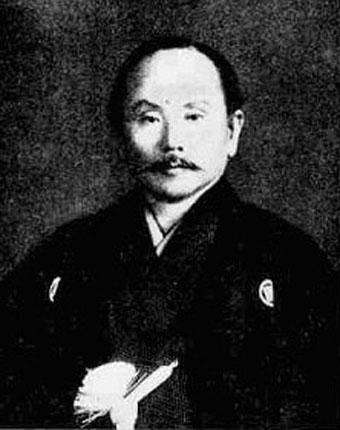 Gishin Funakoshi o "pai" do karate moderno.
 Chegamos assim ao fim deste artigo de Kenji Tokitsu sensei acerca da influência do kendo no karaté, no princípio do século XX. Para ler todos os artigos do autor (em francês) ou para saber mais sobre o mesmo vá até http://www.tokitsu.com. Vai ver que vale a pena.
Dificuldades e facilidades do karaté
Em karaté, uma situação como a do combate entre S. Takano e K. Naïto é difícil de conceber. Antes de mais nada, porque faltam as armaduras de protecção e o shinai para separar (e proteger) os dois adversários. Os corpos tocam-se directamente no decurso de um combate de karaté. É muito difícil ir até ao limite de uma percepção como fez K. Naïto, empurrar o adversário apenas com o seu ki e permanecer imperturbável enquanto, ao mesmo tempo, se recebem golpes sucessivos. No combate de karaté não se pode exercer a percepção a tal ponto. Antes de atingir um tal grau, é preciso evitar os golpes, uma vez que o corpo não está protegido. Do mesmo modo que, outrora, os adeptos do sabre se exercitavam com um bokuto, sem armadura, parando os golpes no momento final, foi através do exercício “yakusoku-gumité” que certos mestres se tentaram aproximar da profundidade do budo. Essa é a razão principal pela qual G. Funakoshi se opunha à prática de combate livre (Jiyu-kumité).
Elaborar um sistema de combate do género do que era usado no kendo, era uma das preocupações mais importantes de todos os mestres de karaté de então. E tentaram introduzir armaduras de protecção a partir, tanto das protecções de kendo, como das utilizadas pelos jogadores que recebem a bola no baseball. Mas antes que algum dos mestres pudesse encontrar uma forma de protecção que permitisse explorar, como no kendo, toda a profundidade do combate, a prática desportiva do jiyu-kumité desenvolveu-se. O dilema permanente é que mesmo aí não se golpeia verdadeiramente. É preciso parar o ataque e ao mesmo tempo executá-lo com o máximo de força. Qualquer que seja a interpretação que se atribua a esse tipo de combate (sundomé-kumité), a situação permanece fictícia. Ter a sensação de bater, sem bater verdadeiramente, e bater realmente, são coisas muito diferentes. Para resolver esse dilema, já aqui foi dito, alguns utilizaram protecções inspiradas pelo kendo, mas o corpo vestido com uma armadura, não sendo o corpo propriamente dito, irá deformar as técnicas de combate quando em contacto com outro corpo não só endurecido, mas mais pesado pela utilização da armadura. E, se por um lado, o ferimento na cara é evitado, por outro lado, o choque ao nível das cervicais é maior por causa do peso do capacete. Outros, assim, adoptaram a regra de executar os golpes com autenticidade e sem protecções, mas, na sequência de acidentes graves, começaram a proibir certos golpes: à cara, aos orgãos genitais, etc, desvirtuando, por isso, consideravelmente, o conceito de combate. A verdade é que, para permanecer mais próximo da realidade do combate, é preciso saber atacar e defender as partes do corpo mais sensíveis. Por isso, alguns continuam a autorizar ataques reais, a qualquer que seja a parte do corpo, sem utilizar qualquer tipo de protecção. Dentes e costelas partidas são normais, muitos são os narizes partidos e alguns perderam mesmo uma vista. O acumular de golpes recebidos deforma-lhes a percepção e os reflexos e, além do mais, nem todos os traumatismos são visíveis. Deste modo, torna-se, por vezes, difícil delimitar o combate de karaté e a luta de rua.
Com o exemplo do kendo, apercebemo-nos que uma atitude séria face ao combate não implica necessariamente gerir o combate de forma a deixar o adversário impossibilitado de continuar. O essencial é ser capaz de distinguir entre as seguintes situações: “Atingi-o, agora o árbitro vai declarar-me vencedor” e “atingi-o, mas já o tinha vencido”. É esta última que nos leva até à etapa onde “venci o adversário através da vontade e dominei-o sem (precisar de) o atacar”.
Hoje sabemos que é incontestável que os mestres de karaté da geração de Gichin Funakoshi aspiraram a elevar a sua arte ao nível atingido pelo kendo japonês. Partindo desse ponto de vista, podemos constatar que, se o karaté se encontra muito bem desenvolvido como desporto de combate, as suas possibilidades no domínio do budo, no entanto, não foram ainda suficientemente exploradas.
The search of depth in combat (conclusion)
And so we reach the end of Kenji Tokitsu sensei about the influence of kendo in karaté, in the early years of the XX century. In order to read all the articles of the authour (mostly in french) or to know more about him, just go to: http://www.tokitsu.com. You’ll see it’s worth it.
Karaté, the difficult and the easy parts of it.
In karaté, it’s hard to conceive a situation like the combat between S. Takano and K. Naïto. First of all, because the protection gears and the shinais aren’t there to separate (and protect) the two opponents. Bodys touch each others directly during a karaté combat. It’s very difficult to reach the limits of perception, like K. Naïto did, push your adversary by using only your ki and, at the same time, remain undisturbed while receiving successive blows. During a karaté combat one cannot reach such level of perception. Before reaching it, one must avoid the strikes, since the body is not protected. In the same way that, once, the students of the sword exercised with a bokuto, without protective armour, by stoping the blows in the final moment, that’s how some masters, by using the “yakusoku-gumité”, tried to approach the depth of budo. That’s the main reason why G. Funakoshi opposed himself to the practise of free fighting (Jiyu-kumité).
To elaborate a combat system, like the one used in kendo, that was one of the main concerns of all karaté masters back then. And so they tried to introduce protective gears, using not only the kendo armours as inspiration, but also the ones used by baseball catchers. But even before any of them could find a suitable way of protection that allowed, like in kendo, to fully develop the karaté combat, the practise of jiyu-kumité as sport started to arise. The permanent dilemma is that, even in that situation, one don’t really strike. One has to stop the attack and, at the same time, perform it with maximum strength. Whatever the interpretation is of that kind of combat (sundomé-kumité), the situation remains fictitious. To have the sensation of hitting without really doing it, and really hitting, those are two very different things. To solve the problem, it’s already been said here, some tried to use protective gear inspired by kendo, but the body, dressed with an armour, and so, not the body itself, will naturaly distort the fighting techniques when in contact with another, not only hardened but also, heavier body. And if, for once, the face wound is avoid, the schock caused in the cervical area, on the other hand, is much bigger due to the protective helmet. That why some adopted the rule of striking real blows without any protection, but following a series of serious accidents, they interdicted certain blows: to the face, the genital area, etc, and by doing so, considerably damaged the concept of combat. The truth is that, in order to remain closer to the reality of combat, one must know how to attack and defend the most sensible parts of the body. Hence the ones that, still today, continue to authorize the use real blows, against any part of the body and without the use of protective gear. Broken teeht and ribs are commonplace, many are the broken noses and some even lost an eye. The accumulation of the received blows distorts the perception and the reflexes, and furthermore, not all the traumas are visible. In this case, sometimes it’s hard to tell between the karaté combat and the street fight.
With the example of kendo, one realizes that a serious attitude towards fighting, doesn’t necessarily means to manage one’s combat in order to incapacitate the adversary. The essential is to be able to distinguish between the two situations: “I hit him and now the judge is going to declare me the winner” and “I hit him, but I had already won”. The later one is the one that leads us to that satge where “I won thanks to my will and I’ve submitted my adversary without (the need of) attacking him”.
Today we know, without a margin of a doubt, that the karaté masters of Gichin Funakoshi’s generation aspired to rise their art to the levels reached by the japanese kendo. In that point of view, it’s obvious that, altough today karaté is very well developped as a fighting sport, it’s possibilities as budo, however, are not yet sufficiently explored.
23.12.04
A BUSCA DA PROFUNDIDADE DO COMBATE (PARTE II)
E assim cá vamos nós alegremente continuando a traduzir os textos de sensei Tokitsu. De acordo com a tradição, quero lembrar-vos de visitar a página desse senhor que tão simpaticamente me autorizou a traduzir os artigos que agora (espero eu) usufruem. E onde está o site do dito senhor? Mesmo aqui: http://www.tokitsu.com.
A última etapa do kendo, o fundamento do budo
Podemos agora compreender esta frase publicada no nº9 da revista “Kendo Jidai” em 1987:
“Acerca do torneio entre os 8º dan, não houve bons combates este ano, apesar de A. (?) Hanshi ter gerido muito bem o seu combate. Com o seu ki, conseguiu afastar cerca de 5 ou 6 metros o seu adversário de igual nível. É uma coisa difícil de realizar. Mas ainda não compreendeu o essencial do kendo, visto que acabou por lhe executar um golpe no final (do combate). Não precisava de o ter feito, uma vez que já tinha sido capaz de afastar o opositor até esse momento, dominando-o apenas com o ki.”
Esta apreciação subentende uma ideia que se pode formular de variadas maneiras: “Se é possível afastar o adversário desse modo, não era necessário golpear, pois que a situação era evidente. Se ele golpeia, isso implica crueldade. Que outro sentido pode ter o acto de golpear, depois de ter o conduzido e imobilizado com a força do ki?”
É precisamente sobre este ponto que o kendo e a arte do sabre dos samurais diferem pois, uma vez desembainhado o sabre o samurai devia matar. Pode-se dizer que o kendo apareceu quando deixou de ser necessário matar, apesar de se levar o combate sério. Essa atitude, já presente no Japão desde o séc. XVII; é formalizada no fim do séc. XIX e constitui uma das bases do pensamento do budo, à qual Jigoro Kano deu uma forma moderna. Quando o karaté foi introduzido no Japão central, no começo do séc. XIX, foi confrontado com o pensamento e a qualidade atingida pelo budo, do qual a disciplina mais representativa era o kendo. Os mestres de karaté captaram intuitivamente essa profundidade do budo e esforçaram-se para se aproximar dela o mais possível.
A. Itosu, que ficara na ilha de Okinawa, tinha concebido o karaté como um meio de educação fisíca inspirado no modelo militar, mas o seu aluno Gichin Funakoshi, ao instalar-se em Tóquio, tomou como modelo o budo tradicional. Uma vez que ministrava as suas aulas no Yushinkan, o dojo de kendo do célebre Hakudo Nakayama, teria sido de espantar se G. Funakoshi não tivesse tomado consciência do desfasamento qualitativo entre o karaté de Okinawa e o budo japonês, tanto no que respeita à forma como ao nível atingido por ambos.
O método de treino e de ensino do karaté foi elaborado a partir dos exemplos do kendo, do judo e do jujutsu. Os exercícios de sanbon-kumité ou gohon-kumité tem origem nos exercícios de treino do kendo kiri-kaeshi ou uchi-kaeshi. Várias formas de yakusoku-kumité são originadas a partir de exercícios de jujutsu. As roupas utilizadas e o sistema de graduações representado com os cintos coloridos, foram inspirados no judo. Assim, durante a primeira metade do séc. XX, tanto pela forma como pelo conteúdo, o karaté adaptou-se à forma japonesa do budo. Mas é preciso realçar que, mais do que as modificações aparentes, o que não parava de chamar a atenção os mestres de karaté era profundidade do budo japonês. O combate entre S. Takano e K. Naïto dá o exemplo dessa profundidade, com a qual foram confrontados com grande choque e admiração.
The search of depth in combat (part II)
And so here we go again, happily translating sensei Tokitsu's articles. According to tradition, I would like to remind you to visit the website of the gentleman that kindly allowed me to translate the articles that you are now (hopefully) enjoying. And where is it, you might ask? Right here: http://www.tokitsu.com.
The last stage of kendo, the foundation of budo
We are now in a position to better understand this paragraph publish in “Kendo Jidai” magazine, number 9, 1987:
“About the 8th dan tournament, there were no good fighst this year, although A. (?) Hanshi conducted his fight really well. With his ki, he managed to push his adversary of equal level some 5 or 6 metters. That’s a hard thing to accomplish. But he is yet to understand the the essence of budo, since he ended up (the combat) by striking him. He didn’t have to, because he had already shown he could push his opponent, dominating him only with his will.”
This appreciation reveals an idea that can be expressed in different ways: “If it’s possible to keep your adversary away like that, there was no need to strike him, because the situation was obvious. Striking implies cruelty. What other meaning can the act of striking have, after you drived and immobilized him with the use of ki?”
And this is precisely the point where kendo and the samurai’s sword art diverge, because once the sword was drawn, the samurai should kill. One can say kendo appeared when there was no more need to kill, although one was serious about combat. This attitude, wich exists already in Japan since the XVII century, takes on a distinctive form by the end of the XIX century and is one of the foundations of budo philosophy, the same one Jigoro Kano shaped in a more modern form. When karaté was first introduced in central Japan, in the beginning of the XIX century, it was confronted by the philosophy and by the quality attained by budo, from wich the most representative discipline was kendo. The karaté masters captured the depth of budo in an intuitive way and tried effortfully to get as close of it as possible.
A. Itosu, who remained in Okinawa, had conceived karaté as a way of physical education, inspired by the army model, but his student Gichin Funakoshi, after installing himself in Tokyo, he took traditional budo as his model.
Since he teached at the Yushinkan, the kendo dojo of the famous Hakudo Nakayama, it would had been a surprise if he hadn’t realized the qualitative gap between the okinawan karaté and the japanese budo, in matters that concern to form and level attained by both. Hence the methods of training and teaching karaté being inspired by the examples of kendo, judo and jujutsu.
Exercices like sanbon-kumité or gohon-kumité have their roots in kendo exercices like kiri-kaeshi and uchi-kaeshi. Various forms of yakusoku-kumité were originated from jujutsu exercices. The uniforms and the grading sistem represented by the different coloured belts were inspired by judo. And so, during the first half of the XX century, both by form and by content, karaté adapted itself to to japanese budo. But the most important thing is that what kept calling the karaté masters attention was the depth of japanese budo. And the combat between S. Takano and K. Naïto is a good example of that depth, against wich they were confronted with great shock and admiration.
A última etapa do kendo, o fundamento do budo
Podemos agora compreender esta frase publicada no nº9 da revista “Kendo Jidai” em 1987:
“Acerca do torneio entre os 8º dan, não houve bons combates este ano, apesar de A. (?) Hanshi ter gerido muito bem o seu combate. Com o seu ki, conseguiu afastar cerca de 5 ou 6 metros o seu adversário de igual nível. É uma coisa difícil de realizar. Mas ainda não compreendeu o essencial do kendo, visto que acabou por lhe executar um golpe no final (do combate). Não precisava de o ter feito, uma vez que já tinha sido capaz de afastar o opositor até esse momento, dominando-o apenas com o ki.”
Esta apreciação subentende uma ideia que se pode formular de variadas maneiras: “Se é possível afastar o adversário desse modo, não era necessário golpear, pois que a situação era evidente. Se ele golpeia, isso implica crueldade. Que outro sentido pode ter o acto de golpear, depois de ter o conduzido e imobilizado com a força do ki?”
É precisamente sobre este ponto que o kendo e a arte do sabre dos samurais diferem pois, uma vez desembainhado o sabre o samurai devia matar. Pode-se dizer que o kendo apareceu quando deixou de ser necessário matar, apesar de se levar o combate sério. Essa atitude, já presente no Japão desde o séc. XVII; é formalizada no fim do séc. XIX e constitui uma das bases do pensamento do budo, à qual Jigoro Kano deu uma forma moderna. Quando o karaté foi introduzido no Japão central, no começo do séc. XIX, foi confrontado com o pensamento e a qualidade atingida pelo budo, do qual a disciplina mais representativa era o kendo. Os mestres de karaté captaram intuitivamente essa profundidade do budo e esforçaram-se para se aproximar dela o mais possível.
A. Itosu, que ficara na ilha de Okinawa, tinha concebido o karaté como um meio de educação fisíca inspirado no modelo militar, mas o seu aluno Gichin Funakoshi, ao instalar-se em Tóquio, tomou como modelo o budo tradicional. Uma vez que ministrava as suas aulas no Yushinkan, o dojo de kendo do célebre Hakudo Nakayama, teria sido de espantar se G. Funakoshi não tivesse tomado consciência do desfasamento qualitativo entre o karaté de Okinawa e o budo japonês, tanto no que respeita à forma como ao nível atingido por ambos.
O método de treino e de ensino do karaté foi elaborado a partir dos exemplos do kendo, do judo e do jujutsu. Os exercícios de sanbon-kumité ou gohon-kumité tem origem nos exercícios de treino do kendo kiri-kaeshi ou uchi-kaeshi. Várias formas de yakusoku-kumité são originadas a partir de exercícios de jujutsu. As roupas utilizadas e o sistema de graduações representado com os cintos coloridos, foram inspirados no judo. Assim, durante a primeira metade do séc. XX, tanto pela forma como pelo conteúdo, o karaté adaptou-se à forma japonesa do budo. Mas é preciso realçar que, mais do que as modificações aparentes, o que não parava de chamar a atenção os mestres de karaté era profundidade do budo japonês. O combate entre S. Takano e K. Naïto dá o exemplo dessa profundidade, com a qual foram confrontados com grande choque e admiração.
The search of depth in combat (part II)
And so here we go again, happily translating sensei Tokitsu's articles. According to tradition, I would like to remind you to visit the website of the gentleman that kindly allowed me to translate the articles that you are now (hopefully) enjoying. And where is it, you might ask? Right here: http://www.tokitsu.com.
The last stage of kendo, the foundation of budo
We are now in a position to better understand this paragraph publish in “Kendo Jidai” magazine, number 9, 1987:
“About the 8th dan tournament, there were no good fighst this year, although A. (?) Hanshi conducted his fight really well. With his ki, he managed to push his adversary of equal level some 5 or 6 metters. That’s a hard thing to accomplish. But he is yet to understand the the essence of budo, since he ended up (the combat) by striking him. He didn’t have to, because he had already shown he could push his opponent, dominating him only with his will.”
This appreciation reveals an idea that can be expressed in different ways: “If it’s possible to keep your adversary away like that, there was no need to strike him, because the situation was obvious. Striking implies cruelty. What other meaning can the act of striking have, after you drived and immobilized him with the use of ki?”
And this is precisely the point where kendo and the samurai’s sword art diverge, because once the sword was drawn, the samurai should kill. One can say kendo appeared when there was no more need to kill, although one was serious about combat. This attitude, wich exists already in Japan since the XVII century, takes on a distinctive form by the end of the XIX century and is one of the foundations of budo philosophy, the same one Jigoro Kano shaped in a more modern form. When karaté was first introduced in central Japan, in the beginning of the XIX century, it was confronted by the philosophy and by the quality attained by budo, from wich the most representative discipline was kendo. The karaté masters captured the depth of budo in an intuitive way and tried effortfully to get as close of it as possible.
A. Itosu, who remained in Okinawa, had conceived karaté as a way of physical education, inspired by the army model, but his student Gichin Funakoshi, after installing himself in Tokyo, he took traditional budo as his model.
Since he teached at the Yushinkan, the kendo dojo of the famous Hakudo Nakayama, it would had been a surprise if he hadn’t realized the qualitative gap between the okinawan karaté and the japanese budo, in matters that concern to form and level attained by both. Hence the methods of training and teaching karaté being inspired by the examples of kendo, judo and jujutsu.
Exercices like sanbon-kumité or gohon-kumité have their roots in kendo exercices like kiri-kaeshi and uchi-kaeshi. Various forms of yakusoku-kumité were originated from jujutsu exercices. The uniforms and the grading sistem represented by the different coloured belts were inspired by judo. And so, during the first half of the XX century, both by form and by content, karaté adapted itself to to japanese budo. But the most important thing is that what kept calling the karaté masters attention was the depth of japanese budo. And the combat between S. Takano and K. Naïto is a good example of that depth, against wich they were confronted with great shock and admiration.
18.12.04
A BUSCA DA PROFUNDIDADE DO COMBATE (I)
Então cá estamos nós, mais uma vez, com um novo artigo escrito pelo sensei Kenji Tokitsu. vamos continuar a analizar a luta entre S. Takano e K. Naïto. Depois disso, vão lá dar uma olhadela ao site do senhor Tokitsu's e descubram mais sobre ele e sobre outras coisas acerca das quais escreveu. Olhem, estão a um click de distância, já aqui: http://www.tokitsu.com.
Nos textos anteriores foi apresentado o exemplo de um célebre combate de kendo entre dois mestres de antes da segunda guerra. Com isso, quis-se mostrar a profunda dimensão do combate de budo que servia de modelo aos mestres de karaté dos anos trinta.
A complexidade do combate no budo
Voltemos então ao exemplo do combate que nos foi contado por C. Ogawa. Ao colocarmo-nos no lugar do espectador normal de uma competição desportiva de kendo, o julgamento é simples: S. Takano ganhou facilmente pois conseguiu atingir o adversário por cinco vezes, enquanto K. Naïto permaneceu imperturbável, sem defender nem atacar. No entanto, constatámos que a apreciação dos mestres de kendo de então foi completamente diferente. Porquê?
Em primeiro lugar, é preciso sublinhar que se trata de um combate entre mestres do mais alto nível, apreciado pelos seus pares. Sob a aparência física do combate, estes apreciaram o desenrolar de um combate entre o espírito e a vontade de duas pessoas, o que qualificavam como combate de “ki”. K. Naïto consegue manter o seu adversário à distância com a vontade transmitida através do seu shinai (kiai-sémé). Ele permanece imperturbável mesmo quando é atingido. S. Takano é empurrado pela vontade que emana do seu oponente e vê-se obrigado a atacar para evitar recuar ainda mais. Ou seja, ele não ataca porque encontrou uma falha no seu adversário, mas sim porque é obrigado a fazê-lo. Os seus golpes são semelhantes ao alpinista que prega uma estaca para evitar cair e não para o ajudar à subir. O que os mestres presentes apreciaram foi que K. Naïto forçou o seu adversário na obrigação de atacar sem estar, no entanto, em posição de escolher o seu ataque. É preciso acrescentar que o relato de Ogawa sensei omite o facto de S. Takano ter sido obrigado a recuar à medida que executava os ataques e que, quando o árbitro parou o combate, este se encontrava já próximo do limite da área destinada à contenda. A guarda jodan é, em princípio, uma guarda que se assume quando se enfrenta um adversário mais fraco e S. Takano saudou o seu opositor ao assumir essa guarda de que era excelente utilizador. Tendo assumido jodan, era ele que deveria ter “empurrado” o seu antagonista, mesmo sem o atacar. Mas foi K. Naïto que, com a sua guarda chudan (menos ofensiva) criou a situação já referida em que S. Takano foi obrigado a atacar para não ser obrigado a recuar ainda mais. Foi essa maneira de gerir o combate que os outros praticantes de alto nível consideraram como “magnífica para lá de qualquer descrição”.
Assim, o que importava no kendo, a esse nível, não era o simples facto de conseguir ou não um ataque decisivo sobre o adversário, mas de que maneira dominar a vontade (ki) do mesmo. Se for possível aniquilar o ki do opositor, esse não conseguirá atacar e mesmo que o faça, o seu gesto não poderá ser perfeito visto que o “ki-ken-tai” (unidade do espírito, da espada e do corpo) não está perfeitamente impregnado na sua técnica. Se se consegue conduzir o oponente até uma situação semelhante, nem é necessário executar qualquer ataque. O kendo nessa altura era praticado com tal mestria que permitia esse nível de consciência. Para o espectador normal, os golpes de S. Takano podiam parecer magníficos, pois eram “encaixados” sem defesa, mas para os conhecedores de alto nível era evidente que esses golpes não eram decisivos e é por esse motivo que K. Naïto decidiu não os defender.
É nesse sentido que ainda hoje os mestres de kendo atribuem uma importância primordial à emanação de energia e de vontade (kiai-sémé) que precede a troca de golpes em combate. Esse tipo de combate é considerado por certos kendokas modernos como o ideal do kendo, a sua última etapa, o kyukyoku-nokendo.
The search of depth in combat (part I)
So here we are, once again, with a new article written by Kenji Tokitsu sensei. We'll continue to analize the fight between S. Takano and K. Naïto. After this, go on, take a look at Mr. Tokitsu's site and find out more about him and all that he wrote about. Hey, it's a click away and right here: http://www.tokitsu.com.In the previous articles the example of a famous combat of kendo between two great masters from before the II world war. The intention was to show the profound dimension of budo combat, that served as a pattern to the karaté masters of the 30s.
The complexity of budo combat
So, let’s go back to the example that C. Ogawa told us about. If we get ourselves into the shoes of an ordinary spectator attending a kendo sports competition, the judgement is rather simple: S. Takano won easily because he managed to strike his opponent five times in a row, while K. Naïto remained undisturbed, without blocking or attacking. However, we realized that the appreciation of the kendo masters back then was completely different. And why?
First of all, we have to emphasize the fact that we are talking about a combat between two masters of the highest level, and witnessed by their peers. And beneath all the physical aspects of the combat, what they appreciated was the developping of a fight between the spirit and the will of the two fighters, what they called a “ki” combat.
K. Naïto managed to keep his adversary in the distance, using the will transmited through his shinai (kiai-sémé). He remained undisturbed even when he’s hit. On the other hand, S. Takano is pushed away by the will that emanates from his antagonist and feels compelled to attack, in order to avoid having to pull back even more. In other words, he is not attacking because a found a flaw in his adversary, he does it because he is forced to do it. His strikes are like the ones of a rock climber, who nails another spike in the rock in order to avoid falling down, rather then to help him climb up. So, what the masters saw was K. Naïto forcing his opposer to attack, while not in a position of doing it properly. One must had that Ogawa sensei’s narrative omits the fact that S. Takano was forced to retreat, doing so at the same time he kept on striking, and by the time the judge stopped the fight, he was already nearby the line that limits the competion area.
The jodan stance is, in essence, a stance assumed when facing a weaker adversary and S. Takano saluted his opponent just before assuming jodan, a stance he used with great excellence. So it was supposed to be him the one who “pushed” his antagonist, even without attacking him. But it was K. Naïto who, with his chudan kamae (a less offensive stance) created the already mentioned situation, forcing Takano to strike him in order not to forced to withdraw even more. It was that way of managing the fight that the other senseis considered as “magnificent beyond any description”.
Now, what mattered in kendo, at that level, it was not to be able to achieve or not achieve a decisive strike over the antagonist, but how to dominate his fighting will (ki). If it is possible to overwhelm the opponent’s ki, he will not be able to attack, and even if he does it, his gesture will not be perfect, because the “ki-ken-tai” (the unity of spirit, sword and body) will not be completely imbued in his technique. If one achieves to drive the adversary into such a situation, it’s not even necessary to attack. You see, back then, kendo was practised with such proficiency, that allowed such conscience level. To the normal spectator’s eyes, S. Takano’s strikes appeared as magnificent and, furthermore, were executed without any visible opposition from his opponent, but for the high level masters it was evident those strikes were not decisive and that’s the reason why K. Naïto decided not to parried.
That’s why, still today, kendo masters attribute a great deal of importance to the “emanation” of energy and of will (kiai-sémé) that precedes the actual exchange of blows during the combat. That kind of combat is considered, by some modern kendokas, as the ideal of kendo, it’s last stage, and is called kyukyoku-nokendo.
Nos textos anteriores foi apresentado o exemplo de um célebre combate de kendo entre dois mestres de antes da segunda guerra. Com isso, quis-se mostrar a profunda dimensão do combate de budo que servia de modelo aos mestres de karaté dos anos trinta.
A complexidade do combate no budo
Voltemos então ao exemplo do combate que nos foi contado por C. Ogawa. Ao colocarmo-nos no lugar do espectador normal de uma competição desportiva de kendo, o julgamento é simples: S. Takano ganhou facilmente pois conseguiu atingir o adversário por cinco vezes, enquanto K. Naïto permaneceu imperturbável, sem defender nem atacar. No entanto, constatámos que a apreciação dos mestres de kendo de então foi completamente diferente. Porquê?
Em primeiro lugar, é preciso sublinhar que se trata de um combate entre mestres do mais alto nível, apreciado pelos seus pares. Sob a aparência física do combate, estes apreciaram o desenrolar de um combate entre o espírito e a vontade de duas pessoas, o que qualificavam como combate de “ki”. K. Naïto consegue manter o seu adversário à distância com a vontade transmitida através do seu shinai (kiai-sémé). Ele permanece imperturbável mesmo quando é atingido. S. Takano é empurrado pela vontade que emana do seu oponente e vê-se obrigado a atacar para evitar recuar ainda mais. Ou seja, ele não ataca porque encontrou uma falha no seu adversário, mas sim porque é obrigado a fazê-lo. Os seus golpes são semelhantes ao alpinista que prega uma estaca para evitar cair e não para o ajudar à subir. O que os mestres presentes apreciaram foi que K. Naïto forçou o seu adversário na obrigação de atacar sem estar, no entanto, em posição de escolher o seu ataque. É preciso acrescentar que o relato de Ogawa sensei omite o facto de S. Takano ter sido obrigado a recuar à medida que executava os ataques e que, quando o árbitro parou o combate, este se encontrava já próximo do limite da área destinada à contenda. A guarda jodan é, em princípio, uma guarda que se assume quando se enfrenta um adversário mais fraco e S. Takano saudou o seu opositor ao assumir essa guarda de que era excelente utilizador. Tendo assumido jodan, era ele que deveria ter “empurrado” o seu antagonista, mesmo sem o atacar. Mas foi K. Naïto que, com a sua guarda chudan (menos ofensiva) criou a situação já referida em que S. Takano foi obrigado a atacar para não ser obrigado a recuar ainda mais. Foi essa maneira de gerir o combate que os outros praticantes de alto nível consideraram como “magnífica para lá de qualquer descrição”.
Assim, o que importava no kendo, a esse nível, não era o simples facto de conseguir ou não um ataque decisivo sobre o adversário, mas de que maneira dominar a vontade (ki) do mesmo. Se for possível aniquilar o ki do opositor, esse não conseguirá atacar e mesmo que o faça, o seu gesto não poderá ser perfeito visto que o “ki-ken-tai” (unidade do espírito, da espada e do corpo) não está perfeitamente impregnado na sua técnica. Se se consegue conduzir o oponente até uma situação semelhante, nem é necessário executar qualquer ataque. O kendo nessa altura era praticado com tal mestria que permitia esse nível de consciência. Para o espectador normal, os golpes de S. Takano podiam parecer magníficos, pois eram “encaixados” sem defesa, mas para os conhecedores de alto nível era evidente que esses golpes não eram decisivos e é por esse motivo que K. Naïto decidiu não os defender.
É nesse sentido que ainda hoje os mestres de kendo atribuem uma importância primordial à emanação de energia e de vontade (kiai-sémé) que precede a troca de golpes em combate. Esse tipo de combate é considerado por certos kendokas modernos como o ideal do kendo, a sua última etapa, o kyukyoku-nokendo.
The search of depth in combat (part I)
So here we are, once again, with a new article written by Kenji Tokitsu sensei. We'll continue to analize the fight between S. Takano and K. Naïto. After this, go on, take a look at Mr. Tokitsu's site and find out more about him and all that he wrote about. Hey, it's a click away and right here: http://www.tokitsu.com.In the previous articles the example of a famous combat of kendo between two great masters from before the II world war. The intention was to show the profound dimension of budo combat, that served as a pattern to the karaté masters of the 30s.
The complexity of budo combat
So, let’s go back to the example that C. Ogawa told us about. If we get ourselves into the shoes of an ordinary spectator attending a kendo sports competition, the judgement is rather simple: S. Takano won easily because he managed to strike his opponent five times in a row, while K. Naïto remained undisturbed, without blocking or attacking. However, we realized that the appreciation of the kendo masters back then was completely different. And why?
First of all, we have to emphasize the fact that we are talking about a combat between two masters of the highest level, and witnessed by their peers. And beneath all the physical aspects of the combat, what they appreciated was the developping of a fight between the spirit and the will of the two fighters, what they called a “ki” combat.
K. Naïto managed to keep his adversary in the distance, using the will transmited through his shinai (kiai-sémé). He remained undisturbed even when he’s hit. On the other hand, S. Takano is pushed away by the will that emanates from his antagonist and feels compelled to attack, in order to avoid having to pull back even more. In other words, he is not attacking because a found a flaw in his adversary, he does it because he is forced to do it. His strikes are like the ones of a rock climber, who nails another spike in the rock in order to avoid falling down, rather then to help him climb up. So, what the masters saw was K. Naïto forcing his opposer to attack, while not in a position of doing it properly. One must had that Ogawa sensei’s narrative omits the fact that S. Takano was forced to retreat, doing so at the same time he kept on striking, and by the time the judge stopped the fight, he was already nearby the line that limits the competion area.
The jodan stance is, in essence, a stance assumed when facing a weaker adversary and S. Takano saluted his opponent just before assuming jodan, a stance he used with great excellence. So it was supposed to be him the one who “pushed” his antagonist, even without attacking him. But it was K. Naïto who, with his chudan kamae (a less offensive stance) created the already mentioned situation, forcing Takano to strike him in order not to forced to withdraw even more. It was that way of managing the fight that the other senseis considered as “magnificent beyond any description”.
Now, what mattered in kendo, at that level, it was not to be able to achieve or not achieve a decisive strike over the antagonist, but how to dominate his fighting will (ki). If it is possible to overwhelm the opponent’s ki, he will not be able to attack, and even if he does it, his gesture will not be perfect, because the “ki-ken-tai” (the unity of spirit, sword and body) will not be completely imbued in his technique. If one achieves to drive the adversary into such a situation, it’s not even necessary to attack. You see, back then, kendo was practised with such proficiency, that allowed such conscience level. To the normal spectator’s eyes, S. Takano’s strikes appeared as magnificent and, furthermore, were executed without any visible opposition from his opponent, but for the high level masters it was evident those strikes were not decisive and that’s the reason why K. Naïto decided not to parried.
That’s why, still today, kendo masters attribute a great deal of importance to the “emanation” of energy and of will (kiai-sémé) that precedes the actual exchange of blows during the combat. That kind of combat is considered, by some modern kendokas, as the ideal of kendo, it’s last stage, and is called kyukyoku-nokendo.
14.12.04
A IMAGEM E A CONSCIÊNCIA DO BUDO JAPONÊS (CONCLUSÃO)
O ideal do karaté nos anos 1920-1930
O exemplo anterior ilustra bem o que é a consciência do budo e a sua profundidade. Eram, com certeza, exemplos assim que estavam bem presentes nas mentes dos mestres de karaté dos anos de 1920 a 1930 quando, ao elevar a sua qualidade, se esforçaram por aproximá-lo da imagem do budo japonês.
Mas seguir o exemplo do kendo não era assim tão fácil. No kendo é mais fácil praticar, de modo intenso e relativamente seguro, o combate a dois do que no karaté, visto que o shinai e a armadura se interpõem entre os corpos dos combatentes. A preocupação principal dos mestres de karaté dessa altura era encontrar uma maneira de poder treinar o combate que lhes permitisse aproximar-se do nível atingido pelo kendo. Tratava-se não apenas de poder combater sem perigo, mas também de encontrar um aprofundamento da via, onde o exercício de combate levasse a uma formação em profundidade da personalidade, que não é nem uma ilusão, nem uma forma de misticísmo, visto que pode ser reconhecida sem hesitação, pelo modo como se executa o combate.
No espírito dos budokas da época, o aprofundar da sua arte confundia-se com o aperfeiçoamento das qualidades humanas. Esta identificação, que é o fundamento do budo, só muito dificilmente passa hoje através da competição das artes marciais, graças à qual o karaté conhece uma larga expansão. É quando voltamos às tentativas dos mestres de outrora, que descobrimos uma outra dimensão do karaté, para a qual os nossos predecessores procuravam encaminhar-se.
No próximo artigo, enquanto reflectimos no exemplo do combate entre S. Takano e K. Naïto, aparentemente simples, mas complexo de interpretar, examinaremos o que então se procurava concretamente no kendo e, por consequência, qual a imagem do budo para onde se inclinava o karaté.
THE IMAGE AND CONSCIENCE OF JAPANESE BUDO (CONCLUSION)
Karaté’s ideal during the years 1920-1930
The previous example ilustrates rather well what is the conscience of budo and it’s depth. Examples like that one were, for sure, present in the minds of the karaté masters during the years 1920 until 1930, when, by raising the quality of their martial art, they made the effort to approach it, as much as possible, to that image of japanese budo.
But following kendo’s example wasn’t that easy. The practise of combat one-on-one, in an intense and relatively safe way, it’s easier to practise in kendo than in karaté, since the shinai and the protective gear interposes itself between the body of both fighters. The main concern of the karaté masters from those days, was to find a way to practise combat that allowed them to get closer to the level reached by the kendo experts. It was, not only about being able to fight without danger, but also to find a way of going deeper in the path (do), where the fighting exercise could lead to a greater personal improvement, wich is nor an illusion, nor a form of mysticism, since it can be easily recognized by the way one practises one-on-one combat.
In those days, in the budokas spirits, the deepening of their art didn’t distinguished itself from perfectioning the human qualities. This identification, the foundation of budo, it’s hardly present in today's martial arts competions, the main reason why karaté knows a very large expansion. It’s when we go back to the early attempts made, long ago, by those masters, that we discover the different dimension of karaté our prededessors were inclined to tend to.
In the next article, while reflecting on the fight that opposed S. Takano to K. Naïto, apparently simple, yet complex to interpret, we’ll also examine what was kendo’s real goal, and as a consequence, wich budo’s image karaté was leaning towards.
O exemplo anterior ilustra bem o que é a consciência do budo e a sua profundidade. Eram, com certeza, exemplos assim que estavam bem presentes nas mentes dos mestres de karaté dos anos de 1920 a 1930 quando, ao elevar a sua qualidade, se esforçaram por aproximá-lo da imagem do budo japonês.
Mas seguir o exemplo do kendo não era assim tão fácil. No kendo é mais fácil praticar, de modo intenso e relativamente seguro, o combate a dois do que no karaté, visto que o shinai e a armadura se interpõem entre os corpos dos combatentes. A preocupação principal dos mestres de karaté dessa altura era encontrar uma maneira de poder treinar o combate que lhes permitisse aproximar-se do nível atingido pelo kendo. Tratava-se não apenas de poder combater sem perigo, mas também de encontrar um aprofundamento da via, onde o exercício de combate levasse a uma formação em profundidade da personalidade, que não é nem uma ilusão, nem uma forma de misticísmo, visto que pode ser reconhecida sem hesitação, pelo modo como se executa o combate.
No espírito dos budokas da época, o aprofundar da sua arte confundia-se com o aperfeiçoamento das qualidades humanas. Esta identificação, que é o fundamento do budo, só muito dificilmente passa hoje através da competição das artes marciais, graças à qual o karaté conhece uma larga expansão. É quando voltamos às tentativas dos mestres de outrora, que descobrimos uma outra dimensão do karaté, para a qual os nossos predecessores procuravam encaminhar-se.
No próximo artigo, enquanto reflectimos no exemplo do combate entre S. Takano e K. Naïto, aparentemente simples, mas complexo de interpretar, examinaremos o que então se procurava concretamente no kendo e, por consequência, qual a imagem do budo para onde se inclinava o karaté.
THE IMAGE AND CONSCIENCE OF JAPANESE BUDO (CONCLUSION)
Karaté’s ideal during the years 1920-1930
The previous example ilustrates rather well what is the conscience of budo and it’s depth. Examples like that one were, for sure, present in the minds of the karaté masters during the years 1920 until 1930, when, by raising the quality of their martial art, they made the effort to approach it, as much as possible, to that image of japanese budo.
But following kendo’s example wasn’t that easy. The practise of combat one-on-one, in an intense and relatively safe way, it’s easier to practise in kendo than in karaté, since the shinai and the protective gear interposes itself between the body of both fighters. The main concern of the karaté masters from those days, was to find a way to practise combat that allowed them to get closer to the level reached by the kendo experts. It was, not only about being able to fight without danger, but also to find a way of going deeper in the path (do), where the fighting exercise could lead to a greater personal improvement, wich is nor an illusion, nor a form of mysticism, since it can be easily recognized by the way one practises one-on-one combat.
In those days, in the budokas spirits, the deepening of their art didn’t distinguished itself from perfectioning the human qualities. This identification, the foundation of budo, it’s hardly present in today's martial arts competions, the main reason why karaté knows a very large expansion. It’s when we go back to the early attempts made, long ago, by those masters, that we discover the different dimension of karaté our prededessors were inclined to tend to.
In the next article, while reflecting on the fight that opposed S. Takano to K. Naïto, apparently simple, yet complex to interpret, we’ll also examine what was kendo’s real goal, and as a consequence, wich budo’s image karaté was leaning towards.
13.12.04
A IMAGEM E A CONSCIÊNCIA DO BUDO JAPONÊS
Prosseguimos com a publicação dos textos e artigos da autoria de Kenji Tokitsu sensei. Como sempre lembro-lhe que todos estes seus textos podem ser encontrados (em francês principalmente) em http://www.tokitsu.com.
Para os que pensam que a palavra budo significa simplesmente “artes marciais japonesas”, a preocupação de defini-la melhor parecerá, com certeza, redundante. Mas se se deseja captar a natureza do esforço dos mestres antigos, essa definição torna-se indispensável. Os primeiros mestres de karaté oriundos de Okinawa ficaram muito impressinados com os diferentes mestres de budo que encontraram no Japão. Por exemplo, Jigoro Kano, o judo que criou e também a sua personalidade foram factores que os impressionaram fortemente. Gichin Funakoshi, por seu lado, estabeleceu uma forte relação com Hakudo Nakayama, um dos mestres de kendo mais célebres do seu tempo, tendo este último chegado a emprestar-lhe o seu dojo, para que Funakoshi pudesse, assim, ensinar convenientemente o karaté. O zelo desmonstrado pelo homem do sabre influenciou Gishin Funakoshi na sua elaboração do karaté enquanto budo. Mas para que imagem e para que ideia do budo se inclinavam eles nessa altura? Vamos tentar explicar utilizando um exemplo. No número 7 da revista japonesa “Kendo Jidai” de 1987, Ogawa Chutaro, hanshi, 9º dan de kendo, então com 85 anos, conta: “Quando tinha 27 anos, assisti no Butokuden de Quioto a um combate entre dois mestres de kendo célebres: Takano Saburo e Naïto Kôji.” Convém realçar que os mestres de kendo actuais de nível mais elevado, dos quais Ogawa faz parte, colocam esses dois mestres entre os maiores da época moderna, considerando como quase impossível igualá-los, nas condições actuais. Dito isto, voltemos então à narração de Ogawa sensei:
“As pontas dos shinais dos dois hanshi mal se tocavam. Ambos se encontravam no começo em chudan kamae (guarda média). Depois, Takano sensei saudou ligeiramente e assumiu a jodan kamae (guarda alta) levantando o shinai acima da cabeça. Essa guarda em jodan kamae é magnífica... Naïto sensei mantinha o seu shinai en seigan, com a ponta em direcção aos olhos do seu adversário. Dessa posição, ele continuou a lançar poderosamente o seu ki (energia interna) ofensivo, enquanto que Takano sensei lançava também o seu ki, mas a partir da guarda jodan. Os espectadores não faziam o menor ruído e a sala estava calma como terra ensopada em água. O combate prosseguiu silenciosamente. Passaram trinta segundos, depois, um minuto. De súbito, com um ruído seco, o shinai de Takano atingiu o kote (pulso) de Naïto sensei, que permaneceu imóvel, sem demonstrar qualquer problema por ter recebido um golpe. Takano sensei reassumiu a guarda jodan. Naïto sensei permaneceu em chudan.
Depois de fintar um novo ataque ao pulso, Takano sensei atinge o men (cabeça) do seu adversário e depois encadeia cinco ataques consecutivos ao men e ao kote de Naïto sensei. A cada ataque, o ruído seco repercute-se na sala, mas Naïto sensei permanece imperturbável, como se os ataques de Takano sensei não existissem. Ao fim de uns instantes, o árbitro faz sinal para acabar o combate e os dois mestres separam-se. Naïto sensei não executou um único ataque.”
Esta é a descrição do combate modelo (mohan-jiai) efectuado pelos dois maiores mestres de kendo da época. Depois de ter lido até aqui, já nos percebemos que Takano sensei atingiu, por cinco vezes, o kote e o men de Naïto sensei, enquanto que este não executou qualquer ataque. Assim, aparentemente, Takano Saburo deveria ser facilmente considerado vencedor. Continuemos a leitura da descrição de C. Ogawa:
“Durante esse combate, cada vez que Takano sensei tentava atingir o kote ou o men, Naïto sensei projectava o seu ki (ki-atari). Se Takano sensei tivesse conseguido atingi-lo depois de colocar Naïto sensei em posição defensiva, utilizando a projecção da sua vontade de atacar, aí sim, os seus ataques teriam sido considerados válidos. Mas cada vez que Takano sensei tentou atacar, Naïto anulou com o seu ki, o ki de Takano. Eis porque todos os seus ataques falharam, apesar de terem atingido o seu adversário. Não havia qualquer vazio nem na guarda nem no espírito de Naïto sensei. Takano sensei atingiu onde não existia vazio. Atacou e o seu ataque simplesmente tocou no adversário. Mais nada. Se se ataca só por atacar sem se conseguir criar uma aberta na guarda do adversário, esse ataque não é um verdadeiro ataque. Desse modo, se se ataca no momento em que não se deve atacar, como neste combate, é a qualidade do kendo daquele que ataca que está a ser prejudicada. Este é um um ponto difícil do kendo.”
C. Ogawa cita de seguida as palavras de Sosuké Nakano (hanshi 10º dan) acerca desse mesmo combate:
“O combate entre Naïto sensei e Takano sensei era o combate entre o kiai e a técnica. Takano sensei fez um combate com as suas técnicas, enquanto que Naïto sensei combatia com o seu ki. Foi um combate modelo magnífico, para além de qualquer descrição. Fiquei surpreendido por me aperceber da distância que separa o combate com toda a plenitude do ki e o combate com técnicas.”
Que conclusões tirar desta descrição? Efectivamente, tal como diz Ogawa sensei, este é um ponto difícil do kendo. É também um ponto poucos jovens kendokas de hoje conseguem compreender, dizia recentemente um mestre japonês de kendo.
continua...
THE IMAGE AND CONSCIENCE OF JAPANESE BUDO
And now we'll continue to publish Kenji Tokitsu sensei's articles and writings. As usual, let me remind you that all his articles are available (mostly in french) at http://www.tokitsu.com.
For those who think that the word budo simply means “japanese martial arts”, the concern of trying to define it better than that, will, for sure, seem redundant. But if one wants to capture the true nature of the effort of those old masters, that definition becomes indispensable. The first karaté masters from Okinawa were very impressed by the various budo masters they came across in Japan. Jigoro Kano, the judo he created, but also his unique personality, were factors that made a strong impression. Gichin Funakoshi, for instance, established a strong relationship with Hakudo Nakayama, one of the most famous kendo masters of his time, and he even allow Funakoshi to use his dojo, so that he could teach his karaté conveniently. This eagerness demonstrated by the sword master strongly influenced Gichin Funakoshi during his elaboration of karaté as budo. But what was the image and the ideal of budo, those men were inclined to back then? Let’s try to explain using an exemple: in 1987, aged 85, Ogawa Chutaro, hanshi, kendo 9th dan, told the japanese magazine “Kendo Jidai” the follwing: “I was 27 when I witnessed a combat, in the Kyoto Butokuden, between two famous kendo masters: Takano Saburo e Naïto Kôji.” It’s probably important to enhance here the fact that the highest level kendo masters today, whose group Ogawa sensei is part of, place those two masters, Takano and Naïto, among the greatest masters of the modern era, and consider their skills as almost impossible to equal, given the current conditions. Having said that, let’s go back to Ogawa sensei’s narrative:
“The tips of the shinais hardly touched themselves. In the beginning they were both in chudan kamae (middle stance). Then, Takano sensei bowed slightly and assumed jodan kamae (above stance)by raising his shinai above the head. That stance, jodan kamae, is really magnificent. Naïto sensei kept his shinai in seigan, pointing to his adversary’s eyes. From that position he continued to project his offensive ki (inner energy) in a powerfull way, while in jodan kamae, Takano sensei also launched his ki. The spectators didn’t made the slightest sound and the hall was calm as land soaked in water. The fight went on in silence. Thirty seconds went by, then a minute. Suddenly, with a dry sound, Takano’s shinai hit Naïto sensei’s kote (wrist), who remained immovable, without demonstrating any problem because of that. Takano sensei then returned to jodan kamae. Naïto sensei remained in chudan.
After faking another wrist attack, Takano sensei strikes the men (head) of his opponent once, and then starts a series of five consecutive strikes, aiming at both the men and the kote of Naïto sensei. During each one of the strikes, the sound of the shinai hitting the targets echoes in the hall, but Naïto sensei remains undisturbed, as if Takano sensei’s attacks didn’t exist at all. A few moments later, the judge signals the end of the combat and the two opponents brake up. Naïto sensei didn’t even strive one single attack.”
This is the description of the exemplary combat (mohan-jiai) performed by two of the greatest kendo masters ever. Until this point, we have already realized that Takano sensei hit, for five times in a row, both the kote and the men of Naïto sensei, while this one didn’t execute any attack at all. So, apparently, Takano Saburo should easily be considered the winner. But let’s keep on reading Ogawa sensei’s words:
“During the fight, every time Takano sensei try to hit his men or his kote, Naïto sensei projected his ki (ki-atari). If Takano sensei, by using his own will to attack, had managed to hit Naïto sensei, after forcing him to take a defensive attitude, then all his attacks would have been considered as valid ones. But instead of that, each time he attacked, Naïto sensei’s ki annulled his ki. That is why, despite hitting the opponent, all his attacks failled. There wasn’t any void, nor in the kamae nor in the spirit of Naïto sensei. So Takano sensei stroke were there was no void to fulfill. He attack and his strike only managed to touch his adversary. That’s all. If one attacks, without creating first a void in the adversary’s kamae, that attack is not a true attack. In other words, if one strikes, when one should not do it, like during this fight, it’s the kendo’s quality of the one who attacks that is being harmed. This is a very difficult theme in kendo.”
After that, C. Ogawa quotes the words of Sosuké Nakano (hanshi, kendo 10th dan) about that same combat:
“The fight of Naïto sensei and Takano sensei, was the fight between kiai and technique. Takano sensei fought using his kendo techniques, while Naïto sensei used his ki. It was a magnificent exemplary combat, beyond description. I was surprised when I realize the distance that separates fighting with the fullness of ki from fighting using techniques.”
What can we conclude of the narrative? Like Ogawa sensei says, this is a difficult theme in kendo. It’s also a point that “today, few young kendokas can understand”, one japanese kendo sensei said recently.
to be continued...
Para os que pensam que a palavra budo significa simplesmente “artes marciais japonesas”, a preocupação de defini-la melhor parecerá, com certeza, redundante. Mas se se deseja captar a natureza do esforço dos mestres antigos, essa definição torna-se indispensável. Os primeiros mestres de karaté oriundos de Okinawa ficaram muito impressinados com os diferentes mestres de budo que encontraram no Japão. Por exemplo, Jigoro Kano, o judo que criou e também a sua personalidade foram factores que os impressionaram fortemente. Gichin Funakoshi, por seu lado, estabeleceu uma forte relação com Hakudo Nakayama, um dos mestres de kendo mais célebres do seu tempo, tendo este último chegado a emprestar-lhe o seu dojo, para que Funakoshi pudesse, assim, ensinar convenientemente o karaté. O zelo desmonstrado pelo homem do sabre influenciou Gishin Funakoshi na sua elaboração do karaté enquanto budo. Mas para que imagem e para que ideia do budo se inclinavam eles nessa altura? Vamos tentar explicar utilizando um exemplo. No número 7 da revista japonesa “Kendo Jidai” de 1987, Ogawa Chutaro, hanshi, 9º dan de kendo, então com 85 anos, conta: “Quando tinha 27 anos, assisti no Butokuden de Quioto a um combate entre dois mestres de kendo célebres: Takano Saburo e Naïto Kôji.” Convém realçar que os mestres de kendo actuais de nível mais elevado, dos quais Ogawa faz parte, colocam esses dois mestres entre os maiores da época moderna, considerando como quase impossível igualá-los, nas condições actuais. Dito isto, voltemos então à narração de Ogawa sensei:
“As pontas dos shinais dos dois hanshi mal se tocavam. Ambos se encontravam no começo em chudan kamae (guarda média). Depois, Takano sensei saudou ligeiramente e assumiu a jodan kamae (guarda alta) levantando o shinai acima da cabeça. Essa guarda em jodan kamae é magnífica... Naïto sensei mantinha o seu shinai en seigan, com a ponta em direcção aos olhos do seu adversário. Dessa posição, ele continuou a lançar poderosamente o seu ki (energia interna) ofensivo, enquanto que Takano sensei lançava também o seu ki, mas a partir da guarda jodan. Os espectadores não faziam o menor ruído e a sala estava calma como terra ensopada em água. O combate prosseguiu silenciosamente. Passaram trinta segundos, depois, um minuto. De súbito, com um ruído seco, o shinai de Takano atingiu o kote (pulso) de Naïto sensei, que permaneceu imóvel, sem demonstrar qualquer problema por ter recebido um golpe. Takano sensei reassumiu a guarda jodan. Naïto sensei permaneceu em chudan.
Depois de fintar um novo ataque ao pulso, Takano sensei atinge o men (cabeça) do seu adversário e depois encadeia cinco ataques consecutivos ao men e ao kote de Naïto sensei. A cada ataque, o ruído seco repercute-se na sala, mas Naïto sensei permanece imperturbável, como se os ataques de Takano sensei não existissem. Ao fim de uns instantes, o árbitro faz sinal para acabar o combate e os dois mestres separam-se. Naïto sensei não executou um único ataque.”
Esta é a descrição do combate modelo (mohan-jiai) efectuado pelos dois maiores mestres de kendo da época. Depois de ter lido até aqui, já nos percebemos que Takano sensei atingiu, por cinco vezes, o kote e o men de Naïto sensei, enquanto que este não executou qualquer ataque. Assim, aparentemente, Takano Saburo deveria ser facilmente considerado vencedor. Continuemos a leitura da descrição de C. Ogawa:
“Durante esse combate, cada vez que Takano sensei tentava atingir o kote ou o men, Naïto sensei projectava o seu ki (ki-atari). Se Takano sensei tivesse conseguido atingi-lo depois de colocar Naïto sensei em posição defensiva, utilizando a projecção da sua vontade de atacar, aí sim, os seus ataques teriam sido considerados válidos. Mas cada vez que Takano sensei tentou atacar, Naïto anulou com o seu ki, o ki de Takano. Eis porque todos os seus ataques falharam, apesar de terem atingido o seu adversário. Não havia qualquer vazio nem na guarda nem no espírito de Naïto sensei. Takano sensei atingiu onde não existia vazio. Atacou e o seu ataque simplesmente tocou no adversário. Mais nada. Se se ataca só por atacar sem se conseguir criar uma aberta na guarda do adversário, esse ataque não é um verdadeiro ataque. Desse modo, se se ataca no momento em que não se deve atacar, como neste combate, é a qualidade do kendo daquele que ataca que está a ser prejudicada. Este é um um ponto difícil do kendo.”
C. Ogawa cita de seguida as palavras de Sosuké Nakano (hanshi 10º dan) acerca desse mesmo combate:
“O combate entre Naïto sensei e Takano sensei era o combate entre o kiai e a técnica. Takano sensei fez um combate com as suas técnicas, enquanto que Naïto sensei combatia com o seu ki. Foi um combate modelo magnífico, para além de qualquer descrição. Fiquei surpreendido por me aperceber da distância que separa o combate com toda a plenitude do ki e o combate com técnicas.”
Que conclusões tirar desta descrição? Efectivamente, tal como diz Ogawa sensei, este é um ponto difícil do kendo. É também um ponto poucos jovens kendokas de hoje conseguem compreender, dizia recentemente um mestre japonês de kendo.
continua...
THE IMAGE AND CONSCIENCE OF JAPANESE BUDO
And now we'll continue to publish Kenji Tokitsu sensei's articles and writings. As usual, let me remind you that all his articles are available (mostly in french) at http://www.tokitsu.com.
For those who think that the word budo simply means “japanese martial arts”, the concern of trying to define it better than that, will, for sure, seem redundant. But if one wants to capture the true nature of the effort of those old masters, that definition becomes indispensable. The first karaté masters from Okinawa were very impressed by the various budo masters they came across in Japan. Jigoro Kano, the judo he created, but also his unique personality, were factors that made a strong impression. Gichin Funakoshi, for instance, established a strong relationship with Hakudo Nakayama, one of the most famous kendo masters of his time, and he even allow Funakoshi to use his dojo, so that he could teach his karaté conveniently. This eagerness demonstrated by the sword master strongly influenced Gichin Funakoshi during his elaboration of karaté as budo. But what was the image and the ideal of budo, those men were inclined to back then? Let’s try to explain using an exemple: in 1987, aged 85, Ogawa Chutaro, hanshi, kendo 9th dan, told the japanese magazine “Kendo Jidai” the follwing: “I was 27 when I witnessed a combat, in the Kyoto Butokuden, between two famous kendo masters: Takano Saburo e Naïto Kôji.” It’s probably important to enhance here the fact that the highest level kendo masters today, whose group Ogawa sensei is part of, place those two masters, Takano and Naïto, among the greatest masters of the modern era, and consider their skills as almost impossible to equal, given the current conditions. Having said that, let’s go back to Ogawa sensei’s narrative:
“The tips of the shinais hardly touched themselves. In the beginning they were both in chudan kamae (middle stance). Then, Takano sensei bowed slightly and assumed jodan kamae (above stance)by raising his shinai above the head. That stance, jodan kamae, is really magnificent. Naïto sensei kept his shinai in seigan, pointing to his adversary’s eyes. From that position he continued to project his offensive ki (inner energy) in a powerfull way, while in jodan kamae, Takano sensei also launched his ki. The spectators didn’t made the slightest sound and the hall was calm as land soaked in water. The fight went on in silence. Thirty seconds went by, then a minute. Suddenly, with a dry sound, Takano’s shinai hit Naïto sensei’s kote (wrist), who remained immovable, without demonstrating any problem because of that. Takano sensei then returned to jodan kamae. Naïto sensei remained in chudan.
After faking another wrist attack, Takano sensei strikes the men (head) of his opponent once, and then starts a series of five consecutive strikes, aiming at both the men and the kote of Naïto sensei. During each one of the strikes, the sound of the shinai hitting the targets echoes in the hall, but Naïto sensei remains undisturbed, as if Takano sensei’s attacks didn’t exist at all. A few moments later, the judge signals the end of the combat and the two opponents brake up. Naïto sensei didn’t even strive one single attack.”
This is the description of the exemplary combat (mohan-jiai) performed by two of the greatest kendo masters ever. Until this point, we have already realized that Takano sensei hit, for five times in a row, both the kote and the men of Naïto sensei, while this one didn’t execute any attack at all. So, apparently, Takano Saburo should easily be considered the winner. But let’s keep on reading Ogawa sensei’s words:
“During the fight, every time Takano sensei try to hit his men or his kote, Naïto sensei projected his ki (ki-atari). If Takano sensei, by using his own will to attack, had managed to hit Naïto sensei, after forcing him to take a defensive attitude, then all his attacks would have been considered as valid ones. But instead of that, each time he attacked, Naïto sensei’s ki annulled his ki. That is why, despite hitting the opponent, all his attacks failled. There wasn’t any void, nor in the kamae nor in the spirit of Naïto sensei. So Takano sensei stroke were there was no void to fulfill. He attack and his strike only managed to touch his adversary. That’s all. If one attacks, without creating first a void in the adversary’s kamae, that attack is not a true attack. In other words, if one strikes, when one should not do it, like during this fight, it’s the kendo’s quality of the one who attacks that is being harmed. This is a very difficult theme in kendo.”
After that, C. Ogawa quotes the words of Sosuké Nakano (hanshi, kendo 10th dan) about that same combat:
“The fight of Naïto sensei and Takano sensei, was the fight between kiai and technique. Takano sensei fought using his kendo techniques, while Naïto sensei used his ki. It was a magnificent exemplary combat, beyond description. I was surprised when I realize the distance that separates fighting with the fullness of ki from fighting using techniques.”
What can we conclude of the narrative? Like Ogawa sensei says, this is a difficult theme in kendo. It’s also a point that “today, few young kendokas can understand”, one japanese kendo sensei said recently.
to be continued...
12.12.04
WOW
Wow, vejam só o novo contador de visitas. Muita categoria. Estou tão contente. consegui pôr aquela merda... heu, num sítio porreiro... ali. Enfim... foi uma vitória, eu não percebo pevas desta coisa de internet.. tou tão contente...
Wow
Wow, check out my new visitors counter. Great or what? I manage to put that shit... heu, you know... it's a nice place... Oh well... it was a victory, since I don't know nothing about this internet stuff... I'm so happy...
Wow
Wow, check out my new visitors counter. Great or what? I manage to put that shit... heu, you know... it's a nice place... Oh well... it was a victory, since I don't know nothing about this internet stuff... I'm so happy...
8.12.04
As artes marciais japonesas (III)
Eis então a terceira e última parte do artigo de Kenji Tokitsu sensei sobre a história das artes marciais japonesas. Já sabe que para ler outros artigos do autor, nomeadamente sobre karaté, basta ir a http://www.tokitsu.com. Boa leitura.
O kendo pratica-se hoje em dia com uma armadura de protecção e um sabre de bambú (shinai). Tradicionalmente treinava-se a arte do sabre sem armadura e, umas vezes, com um sabre de madeira (bokuto ou bokken), outras com um sabre verdadeiro com a lâmina protegida. O treino consistia principalmente de exercícios técnicos codificados (kumi-tachi). De forma a se aproximar o mais possível de uma situação de combate real, os golpes eram desferidos com grande força, parando apenas no momento antes do impacto o que exigia uma grande concentração mas causava, assim mesmo, inúmeros acidentes. É no início do século XVIII que Naganuma Shirozaemon, da escola Jikishinkage-ryu, introduz as armaduras de protecção e o sabre de bambú nos treinos, de modo a permitir uma maior liberdade na elaboração das técnicas. Naganuma pode, nesse sentido, ser considerado como um dos longínquos fundadores do kendo.
Os ataques são acompanhados de um grito (kiai) que indica ao mesmo tempo qual a parte do corpo visada. Este costume é uma tradição antiga e tem o objectivo, durante o treino, de manifestar a percepção de uma falha no adversário, falha essa que está na origem do ataque. Um ataque aleatório é considerado como não tendo valor; é preciso atacar com vontade e certeza. Somente quatro partes do corpo são consideradas local de ataque: a cabeça, o flanco, os pulsos e a garganta, esta, o alvo mais difícil de atingir, mas também o mais determinante. Um ataque correcto exige uma integração simultânea da vontade (ki), do golpe do sabre (ken) e da postura do corpo (tai). Sem essa integração, nenhum golpe tem valor, mesmo que o adversário seja tocado.
O combate desenrola-se assim dentro de um quadro muito limitado. O golpe perfeito deve ser guiado por uma percepção aguçada. É necessário aperceber, ou criar, o instante vulnerável do adversário antes de fazer o ataque, de acordo com o preceito que diz: “Não ganhes depois de teres atacado, ataca depois de teres ganho”.
É por isso que, no kendo ao mais alto nível, o combate mais importante se desenrola antes que sejam desferidos quaisquer golpes: os dois combatentes tentam cada um criar um vazio na percepção do adversário, penetrar nesse vazio e marcar a sua presença de maneira inequívoca. O kendo requer, por isso, um trabalho mental cuja importância aumenta à medida que que se progride na via. Reconhecer que se foi tocado é uma fase importante da aprendizagem: o praticante agradece ao adversário por lhe ter mostrado o seu ponto fraco. Os critérios do combate são, portanto, interiorizados sem que seja atribuída grande importância aos golpes superficiais: o que se procura é “o golpe que ecoa no coração”. Hoje em dia, a internacionalização das competições desportivas arrasta consigo uma tendência para a exteriorização dos critérios, o que leva a que se procure, de uma distância maior, efectuar golpes mais superficiais, em vez de se procurar a plenitude do ataque. São dois tipos de kendo em vias de se diferenciar: um ligado à competição e outro à tradição.
O kendo é, juntamente com o tiro com arco (kyudo), a arte marcial que permite continuar a treinar até uma idade mais avançada mantendo um nível elevado, por vezes, até, progredindo. Hoje, numerosos kendokas (praticantes de kendo) de idades superiores aos oitenta anos demonstram, através da sua participação em campeonatos que lhes são reservados, o seu alto nível em exercícios de combate livre. Por isso, na óptica tradicional, aperfeiçoar o kendo implica um equilíbrio e uma integração do corpo e do espírito, o que faz com que seja considerado como um excelente método de formação global da pessoa.
The japanese martial arts (III)
Here you have it, the third and final part of Kenji Tokitsu sensei's article about the history of japanese marcial arts. You, know, if you want to read other articles from the same author, about karaté, for instance just go to http://www.tokitsu.com. Enjoy.
Today, we practice kendo with a protective gear and a bamboo sword (shiani). Traditionally, the art of the sword was practised without protective equipment and, sometimes with a wooden sword (bokuto or bokken) others, with a real sword with a protected blade. Most of the training consisted in pre-arranjed exercices (kumi-tachi). In order to get closer and closer from real combat situations, the strikes were brandished with extreme force, and were stopped just before impact, demanding a great deal of concentration, but causing, anyhow, countless accidents. In the beginning of the XVIII century, Naganuma Shirozaemon, of the Jikishinkage-ryu school, introduces protective armours and bamboo swords in training, allowing greater freedom in the development of the technics used. That’s why Naganuma is considered to be one of the forefathers of kendo.
Kendo strikes are normally accompanied by shouting (kiai) the part of the body you’re aiming at. This custom is an old tradition and it’s objective, during practise, is to reveal the perception of a flaw in the opponent, that same flaw being at the core of one’s attack. Random strikes are considered as without value, you must strike with both will and certainty. There are only four targets in the opponent’s body: the head, the torso, the wrists and, the most difficult one, and at the same time the most decisive, the throat. A correct strike demands a simultaneous integration of the will (ki), the sword strike (ken) and the body posture (tai). Without that, no strike has any value, even if the adversary is touched.
So, the fight takes place according to very limited circunstances. The perfect strike must be guided by a very accurate perception. It is necessary to be aware of (or to create) that vulnerable moment in the adversary, before striking, according to the old precept that says: “Do not win after striking, strike after winning.”
That explains why, at kendo’s highest levels, the most important fight takes place even before any strike is attempted: both fighters try to create a void in the adversary’s perception, penetrate it and mark their presence in an unequivocal manner. That’s why kendo requires a mental work whose importance grows along with the progress in the discipline’s way. To recognize you’ve been hit, it’s an important fase of the learning process, and so the kendo student should thank the adversary for showing his (her’s) week point. The fighting criteria is, therefore, interiorized and no importance is paid to superficial blows: the search is on for “the strike that echoes in the heart”. Today, the internationalization of competition drags along the tendency to an exteriorization of the criteria, leading to rather search superficial blows, made from a longer distance, instead of searching the fullness of the attack. This are the two kinds of kendo we see today, differentiating from one another: one more linked to competion and the other to tradition.
Along with kyudo ( way of the bow), kendo is the martial art that allows it’s students to continue to keep on practising at a higher level, even progressing, in despite of ageing. Today, a lot of kendokas (kendo students) with ages up to eighty years old demonstrate, through their participation in championships reserved to them, their incredible skills in combat. That’s why, in the traditional way, to perfect one’s kendo implies balance and an integration of both body and spirit, and so making it an excellent method of personnal improvement.
O kendo pratica-se hoje em dia com uma armadura de protecção e um sabre de bambú (shinai). Tradicionalmente treinava-se a arte do sabre sem armadura e, umas vezes, com um sabre de madeira (bokuto ou bokken), outras com um sabre verdadeiro com a lâmina protegida. O treino consistia principalmente de exercícios técnicos codificados (kumi-tachi). De forma a se aproximar o mais possível de uma situação de combate real, os golpes eram desferidos com grande força, parando apenas no momento antes do impacto o que exigia uma grande concentração mas causava, assim mesmo, inúmeros acidentes. É no início do século XVIII que Naganuma Shirozaemon, da escola Jikishinkage-ryu, introduz as armaduras de protecção e o sabre de bambú nos treinos, de modo a permitir uma maior liberdade na elaboração das técnicas. Naganuma pode, nesse sentido, ser considerado como um dos longínquos fundadores do kendo.
Os ataques são acompanhados de um grito (kiai) que indica ao mesmo tempo qual a parte do corpo visada. Este costume é uma tradição antiga e tem o objectivo, durante o treino, de manifestar a percepção de uma falha no adversário, falha essa que está na origem do ataque. Um ataque aleatório é considerado como não tendo valor; é preciso atacar com vontade e certeza. Somente quatro partes do corpo são consideradas local de ataque: a cabeça, o flanco, os pulsos e a garganta, esta, o alvo mais difícil de atingir, mas também o mais determinante. Um ataque correcto exige uma integração simultânea da vontade (ki), do golpe do sabre (ken) e da postura do corpo (tai). Sem essa integração, nenhum golpe tem valor, mesmo que o adversário seja tocado.
O combate desenrola-se assim dentro de um quadro muito limitado. O golpe perfeito deve ser guiado por uma percepção aguçada. É necessário aperceber, ou criar, o instante vulnerável do adversário antes de fazer o ataque, de acordo com o preceito que diz: “Não ganhes depois de teres atacado, ataca depois de teres ganho”.
É por isso que, no kendo ao mais alto nível, o combate mais importante se desenrola antes que sejam desferidos quaisquer golpes: os dois combatentes tentam cada um criar um vazio na percepção do adversário, penetrar nesse vazio e marcar a sua presença de maneira inequívoca. O kendo requer, por isso, um trabalho mental cuja importância aumenta à medida que que se progride na via. Reconhecer que se foi tocado é uma fase importante da aprendizagem: o praticante agradece ao adversário por lhe ter mostrado o seu ponto fraco. Os critérios do combate são, portanto, interiorizados sem que seja atribuída grande importância aos golpes superficiais: o que se procura é “o golpe que ecoa no coração”. Hoje em dia, a internacionalização das competições desportivas arrasta consigo uma tendência para a exteriorização dos critérios, o que leva a que se procure, de uma distância maior, efectuar golpes mais superficiais, em vez de se procurar a plenitude do ataque. São dois tipos de kendo em vias de se diferenciar: um ligado à competição e outro à tradição.
O kendo é, juntamente com o tiro com arco (kyudo), a arte marcial que permite continuar a treinar até uma idade mais avançada mantendo um nível elevado, por vezes, até, progredindo. Hoje, numerosos kendokas (praticantes de kendo) de idades superiores aos oitenta anos demonstram, através da sua participação em campeonatos que lhes são reservados, o seu alto nível em exercícios de combate livre. Por isso, na óptica tradicional, aperfeiçoar o kendo implica um equilíbrio e uma integração do corpo e do espírito, o que faz com que seja considerado como um excelente método de formação global da pessoa.
The japanese martial arts (III)
Here you have it, the third and final part of Kenji Tokitsu sensei's article about the history of japanese marcial arts. You, know, if you want to read other articles from the same author, about karaté, for instance just go to http://www.tokitsu.com. Enjoy.
Today, we practice kendo with a protective gear and a bamboo sword (shiani). Traditionally, the art of the sword was practised without protective equipment and, sometimes with a wooden sword (bokuto or bokken) others, with a real sword with a protected blade. Most of the training consisted in pre-arranjed exercices (kumi-tachi). In order to get closer and closer from real combat situations, the strikes were brandished with extreme force, and were stopped just before impact, demanding a great deal of concentration, but causing, anyhow, countless accidents. In the beginning of the XVIII century, Naganuma Shirozaemon, of the Jikishinkage-ryu school, introduces protective armours and bamboo swords in training, allowing greater freedom in the development of the technics used. That’s why Naganuma is considered to be one of the forefathers of kendo.
Kendo strikes are normally accompanied by shouting (kiai) the part of the body you’re aiming at. This custom is an old tradition and it’s objective, during practise, is to reveal the perception of a flaw in the opponent, that same flaw being at the core of one’s attack. Random strikes are considered as without value, you must strike with both will and certainty. There are only four targets in the opponent’s body: the head, the torso, the wrists and, the most difficult one, and at the same time the most decisive, the throat. A correct strike demands a simultaneous integration of the will (ki), the sword strike (ken) and the body posture (tai). Without that, no strike has any value, even if the adversary is touched.
So, the fight takes place according to very limited circunstances. The perfect strike must be guided by a very accurate perception. It is necessary to be aware of (or to create) that vulnerable moment in the adversary, before striking, according to the old precept that says: “Do not win after striking, strike after winning.”
That explains why, at kendo’s highest levels, the most important fight takes place even before any strike is attempted: both fighters try to create a void in the adversary’s perception, penetrate it and mark their presence in an unequivocal manner. That’s why kendo requires a mental work whose importance grows along with the progress in the discipline’s way. To recognize you’ve been hit, it’s an important fase of the learning process, and so the kendo student should thank the adversary for showing his (her’s) week point. The fighting criteria is, therefore, interiorized and no importance is paid to superficial blows: the search is on for “the strike that echoes in the heart”. Today, the internationalization of competition drags along the tendency to an exteriorization of the criteria, leading to rather search superficial blows, made from a longer distance, instead of searching the fullness of the attack. This are the two kinds of kendo we see today, differentiating from one another: one more linked to competion and the other to tradition.
Along with kyudo ( way of the bow), kendo is the martial art that allows it’s students to continue to keep on practising at a higher level, even progressing, in despite of ageing. Today, a lot of kendokas (kendo students) with ages up to eighty years old demonstrate, through their participation in championships reserved to them, their incredible skills in combat. That’s why, in the traditional way, to perfect one’s kendo implies balance and an integration of both body and spirit, and so making it an excellent method of personnal improvement.
7.12.04
As artes marciais japonesas (II)
Eis o segundo dos três textos sobre a história das artes marciais japonesas, amavelmente cedidos pelo autor, o sensei Kenji Tokitsu. Para saberem tudo sobre ele, e também para ter acesso aos seus outros textos (em francês) vão até http://www.tokitsu.com e boa leitura.
A palavra budo (“via marcial”) surge a partir da era Meiji (1868-1912) para designar especificamente as artes marciais japonesas. A distinção entre o budo e os desportos de combate, no entanto, atenua-se com a introdução de competições desportivas, em particular no judo, no kendo e no karaté. Por outro lado, o budo distingue-se do bushido antigo, pois abandona os elementos éticos que eram próprios dos guerreiros e distingue-se também do bujutsu (“técnica marcial”), palavra essa, que serve para designar as artes marciais antigas, de uma maneira geral.
O budo, esse, perpectua, de uma forma acessível a toda a gente, as disciplinas que eram outrora privilégio dos guerreiros.
No decurso da época moderna, as artes marciais que se desenvolveram em princípio no sentido da formação individual, começam a ser cada vez mais envolvidas pelo espírito militarista que vai dominar a sociedade japonesa até à segunda guerra mundial. Por essa mesma razão, durante a ocupação do pós-guerra, são atingidas por uma interdição por parte dos aliados que as vêem como um dos suportes ideológicos que motivou os japoneses durante a mesma, interdição que começará por ser levantada primeiramente ao karaté. A partir de 1950 e com a mudança política originada pela guerra da Coreia, são de novo autorizadas, primeiro o judo e depois as outras disciplinas.
Após a guerra, o militarismo foi alvo de severas críticas por parte dos próprios japoneses e as artes marciais assumem um novo ponto de partida baseado desta vez em novas orientações pacifistas. No entanto, é esse passado que explica o porquê de, ainda hoje, a imagem das artes marciais ser frequentemente associada ao conservadorismo e à extrema-direita. É verdade que elas ainda conservam uma certa propensão para privilegiar um certo culto de colectivismo, que pode sempre servir de catalizador para diferentes formas de fanatismo. Face a esse perigo, alguns reagiram e, redefinindo os objectivos do budo, colocaram a tónica sobre a formação pessoal, de maneira a distanciar-se em relação às correntes sociais dominantes.
Na era Edo, o sabre é o símbolo por excelência dos guerreiros, que o praticam sob denominações como gekiken ou kenjutsu. Com a abolição da ordem dos guerreiros em 1872, a arte do sabre passa a ser bastante desconsiderada. Pelo seu lado, os antigos homens de armas não vêem com bons olhos um exército de soldados alistados segundo o modelo ocidental. Quando esse exército se encontra em dificuldades durante uma insurreição de guerreiros do sul do Japão em 1878, é um grupo de adeptos do sabre da polícia que, servindo de reforço, contribui decisivamente para a victória das forças governamentais, acontecimento esse que restaura a imagem dessa disciplina. Os melhores adeptos do sabre, antigos guerreiros sem emprego, são contratados como instrutores da polícia e, sob a orientação da direcção da polícia de Tóquio, surgem vários centros de treino (dojo).
Em 1895 é criada em Quioto uma associação, o Butokukai (“Sociedade da Virtude Marcial”), que controla a qualidade das artes marciais e confere os títulos e as graduações mais elevadas. Butokukai que estará na origem, em 1905, de uma escola superior de budo, onde se ensina principalmente o judo e o kendo. Essas disciplinas virão posteriormente a ocupar um lugar importante na educação física e espiritual dos militares. Em 1911, finalmente, a arte do sabre e da luta são integradas a título de opção nas aulas de educação física das escolas secundárias; em 1925 os textos oficiais utilizam pela primeira vez, para denominar essas disciplinas, as palavras kendo e judo.
The japanese martial arts (II)
Here’s the second of the three articles about the history of japanese martial arts, gentily yielded by it’s author, Kenji Tokitsu sensei. In order to know everything about him, and also to have access to his other articles (mostly in french), go to http://www.tokitsu.com and have a good reading.
The word budo (“marcial way”) appears during the Meiji period to specifically designate the japanese martial arts. The distinction between budo and combat sports, attenuates itself with the introduction of competition, particulary in judo, kendo and karate. On the other hand budo distinguishes from the old bushido, by letting go of it’s ethical elements, wich were an exclusive of the warriors and also distinguishes itself from “bujutsu” (martial technic), the word used to designate the whole of the old martial arts.
Budo perpetuates, in an accessible way to everybody, the disciplines that were once the privilege of the warriors.
During the modern era, and after a development centered around personal improvement, the martial arts started to get involved by a militaristic spirit, the same one that is going to dominate the japanese society until the second world war. So, it’s no surprise that, during the post-war occupation, the martial arts are banned by the allies who looked upon it as one of the ideological supports of the japanese people during the conflict. The ban will be lifted first on karaté. From 1950, with the political changes brought by the war in Korea, all the other disciplines were once again allowed, starting with judo.
After the war, militarism was severely criticised, even by the japanese and the martial arts assume a new starting point, this time based on new pacifistic principles. However, that recent past is oine of the reasons why the image of martial arts is frequently associated to conservadorism and right-wing extremists. The truth is, martial arts still conserve a predisposition to privilege a certain cult of colectivism, often used as a catalyser by all kinds of different forms of fanatism. Faced with that danger, some reacted and, redefining the objectives of budo, placed (again) the accent on personal improvement, setting themselves apart from those social tendencies.
During the Edo period, the sword is still the weapon of excellence of the warriors, who practice it under such names as gekiken and kenjutsu. When the samurai class is dissolved in 1872, the art of the sword becomes a not very well regarded discipline. The former warriors, them, don’t appreciate much the idea of a regular army composed by enlisted men, following the western style. When that same army faces huge problems during an insurrection of warriors from southern Japan in 1878, it’s a group of policemen composed by followers of the art of the sword who contributes decisively to the governement’s forces victory, restauring the good image of the discipline. Soon, the best swordsmen, unemployed former warriors, are hired as police instructors, and under the Tokyo Police supervision various fencing halls (dojo) open their doors.
In 1895, the Butokukai (“Society of the Martial Virtue”) it’s created in Kyoto, an association that regulates the quality of martial arts and confers titles and the higher grades. Butokukai wich will be the origin, in 1905, of a budo university, where judo and kendo are mainly teached. Those two disciplines will later play a very important role, in both the physical and spiritual education of the military. In 1911, finally, the arts of the sword and of grappling become a part of physical education in all high schools of Japan; in 1925 the official documents use for the first time, in order to identify those disciplines, the words kendo and judo.
A palavra budo (“via marcial”) surge a partir da era Meiji (1868-1912) para designar especificamente as artes marciais japonesas. A distinção entre o budo e os desportos de combate, no entanto, atenua-se com a introdução de competições desportivas, em particular no judo, no kendo e no karaté. Por outro lado, o budo distingue-se do bushido antigo, pois abandona os elementos éticos que eram próprios dos guerreiros e distingue-se também do bujutsu (“técnica marcial”), palavra essa, que serve para designar as artes marciais antigas, de uma maneira geral.
O budo, esse, perpectua, de uma forma acessível a toda a gente, as disciplinas que eram outrora privilégio dos guerreiros.
No decurso da época moderna, as artes marciais que se desenvolveram em princípio no sentido da formação individual, começam a ser cada vez mais envolvidas pelo espírito militarista que vai dominar a sociedade japonesa até à segunda guerra mundial. Por essa mesma razão, durante a ocupação do pós-guerra, são atingidas por uma interdição por parte dos aliados que as vêem como um dos suportes ideológicos que motivou os japoneses durante a mesma, interdição que começará por ser levantada primeiramente ao karaté. A partir de 1950 e com a mudança política originada pela guerra da Coreia, são de novo autorizadas, primeiro o judo e depois as outras disciplinas.
Após a guerra, o militarismo foi alvo de severas críticas por parte dos próprios japoneses e as artes marciais assumem um novo ponto de partida baseado desta vez em novas orientações pacifistas. No entanto, é esse passado que explica o porquê de, ainda hoje, a imagem das artes marciais ser frequentemente associada ao conservadorismo e à extrema-direita. É verdade que elas ainda conservam uma certa propensão para privilegiar um certo culto de colectivismo, que pode sempre servir de catalizador para diferentes formas de fanatismo. Face a esse perigo, alguns reagiram e, redefinindo os objectivos do budo, colocaram a tónica sobre a formação pessoal, de maneira a distanciar-se em relação às correntes sociais dominantes.
Na era Edo, o sabre é o símbolo por excelência dos guerreiros, que o praticam sob denominações como gekiken ou kenjutsu. Com a abolição da ordem dos guerreiros em 1872, a arte do sabre passa a ser bastante desconsiderada. Pelo seu lado, os antigos homens de armas não vêem com bons olhos um exército de soldados alistados segundo o modelo ocidental. Quando esse exército se encontra em dificuldades durante uma insurreição de guerreiros do sul do Japão em 1878, é um grupo de adeptos do sabre da polícia que, servindo de reforço, contribui decisivamente para a victória das forças governamentais, acontecimento esse que restaura a imagem dessa disciplina. Os melhores adeptos do sabre, antigos guerreiros sem emprego, são contratados como instrutores da polícia e, sob a orientação da direcção da polícia de Tóquio, surgem vários centros de treino (dojo).
Em 1895 é criada em Quioto uma associação, o Butokukai (“Sociedade da Virtude Marcial”), que controla a qualidade das artes marciais e confere os títulos e as graduações mais elevadas. Butokukai que estará na origem, em 1905, de uma escola superior de budo, onde se ensina principalmente o judo e o kendo. Essas disciplinas virão posteriormente a ocupar um lugar importante na educação física e espiritual dos militares. Em 1911, finalmente, a arte do sabre e da luta são integradas a título de opção nas aulas de educação física das escolas secundárias; em 1925 os textos oficiais utilizam pela primeira vez, para denominar essas disciplinas, as palavras kendo e judo.
The japanese martial arts (II)
Here’s the second of the three articles about the history of japanese martial arts, gentily yielded by it’s author, Kenji Tokitsu sensei. In order to know everything about him, and also to have access to his other articles (mostly in french), go to http://www.tokitsu.com and have a good reading.
The word budo (“marcial way”) appears during the Meiji period to specifically designate the japanese martial arts. The distinction between budo and combat sports, attenuates itself with the introduction of competition, particulary in judo, kendo and karate. On the other hand budo distinguishes from the old bushido, by letting go of it’s ethical elements, wich were an exclusive of the warriors and also distinguishes itself from “bujutsu” (martial technic), the word used to designate the whole of the old martial arts.
Budo perpetuates, in an accessible way to everybody, the disciplines that were once the privilege of the warriors.
During the modern era, and after a development centered around personal improvement, the martial arts started to get involved by a militaristic spirit, the same one that is going to dominate the japanese society until the second world war. So, it’s no surprise that, during the post-war occupation, the martial arts are banned by the allies who looked upon it as one of the ideological supports of the japanese people during the conflict. The ban will be lifted first on karaté. From 1950, with the political changes brought by the war in Korea, all the other disciplines were once again allowed, starting with judo.
After the war, militarism was severely criticised, even by the japanese and the martial arts assume a new starting point, this time based on new pacifistic principles. However, that recent past is oine of the reasons why the image of martial arts is frequently associated to conservadorism and right-wing extremists. The truth is, martial arts still conserve a predisposition to privilege a certain cult of colectivism, often used as a catalyser by all kinds of different forms of fanatism. Faced with that danger, some reacted and, redefining the objectives of budo, placed (again) the accent on personal improvement, setting themselves apart from those social tendencies.
During the Edo period, the sword is still the weapon of excellence of the warriors, who practice it under such names as gekiken and kenjutsu. When the samurai class is dissolved in 1872, the art of the sword becomes a not very well regarded discipline. The former warriors, them, don’t appreciate much the idea of a regular army composed by enlisted men, following the western style. When that same army faces huge problems during an insurrection of warriors from southern Japan in 1878, it’s a group of policemen composed by followers of the art of the sword who contributes decisively to the governement’s forces victory, restauring the good image of the discipline. Soon, the best swordsmen, unemployed former warriors, are hired as police instructors, and under the Tokyo Police supervision various fencing halls (dojo) open their doors.
In 1895, the Butokukai (“Society of the Martial Virtue”) it’s created in Kyoto, an association that regulates the quality of martial arts and confers titles and the higher grades. Butokukai wich will be the origin, in 1905, of a budo university, where judo and kendo are mainly teached. Those two disciplines will later play a very important role, in both the physical and spiritual education of the military. In 1911, finally, the arts of the sword and of grappling become a part of physical education in all high schools of Japan; in 1925 the official documents use for the first time, in order to identify those disciplines, the words kendo and judo.
3.12.04
As artes marciais japonesas
As artes marciais japonesas estão estreitamente ligadas às tradições e à história dos guerreiros (bushi ou samurai) e foram durante muito tempo um privilégio dos mesmos. Distinguem-se por isso das artes marciais praticadas nos outros países da Ásia, como a China, onde se desenvolveram muitas vezes no seio de clans de aldeãos, em templos, entre comerciantes e numa infinidade de sociedades secretas. A concepção e os objectivos dessas artes marciais são, por isso, muito mais divergentes do que os das artes marciais do Japão, as quais tendem a convergir.
É no século VIII que a palavra samurai aparece para designar os homens de armas. Na altura pronunciada saburai, tem origem no verbo saburau, que significa “servir o seu mestre”. O poder desses guerreiros começa a emergir no século IX, quando se começam a organizar em grupos. O nome dado às artes que praticam, no entanto, muda por diversas vezes. No século IX denominam-se tsuwamono no michi (literalmente: a “via das armas”), mas como a palavra tsuwamono surge por vezes usado para designar um homem de armas ou um guerreiro, podemos também traduzir essa expressão como a “via do guerreiro”. Um século mais tarde, as palavras musha e mononofu são, por sua vez, frequentemente utilizadas para designar os guerreiros, e as suas artes marciais passam a ser conhecidas umas vezes por musha no michi, outras por mononofu no mishi. Como os cavaleiros armados com um arco tinham um papel decisivo durante as batalhas, surgem também referências à kyuba no michi (a “via do arqueiro a cavalo”).
De notar que a utilização do termo michi (“via, caminho”) testemunha, desde logo, algumas preocupações éticas.
A partir da era Edo (1603-1868) uma hierarquia social muito bem delimitada impõe-se e divide a sociedade em quatro estratos: os guerreiros, os camponeses, os artesãos e os comerciantes. Os três últimos estratos devem respeito ao primeiro, o qual denominam utilizando o termo samurai. É ao longo desse periodo de paz que as artes marciais se refinam e se aperfeiçoam. Os nomes com que são conhecidas são, nessa altura, os mais variados: hyoho, heiho, bugei, bujutsu, geijutsu, gei, etc. Todos os guerreiros de então são forçados a estudar obrigatoriamente sete artes, a saber: o sabre (kenjutsu), a lança (sojutsu), o arco (kyujutsu), a equitação (bajutsu), o combate de mãos nuas (jujutsu), o canhão (hojutsu) e a estratégia (hyoho). A arte dominante, no entanto, continua a ser o sabre, que é também conhecida como tojutsu, toho, kenpo ou gekken. A essas sete artes juntam-se ainda outras disciplinas, prefazendo um total de dezoito artes marciais: a natação, a arte de desembainhar o sabre, o manejamento da faca, do bastão, de uma lança longa munida de de uma grande lâmina curva (naginata), de uma arma de dez ganchos (jittejutsu), de uma foice ligada a uma corrente (kusarigama), também a arte de lançar uma faca (shurikenjutsu), de lançar/soprar(?) dardos (fukumibari), de capturar adversários com ajuda de uma corda (toritejutsu) ou de uma vara longa terminada com pontas separadas (mojirijutsu) e, finalmente, as diversas técnicas de espionagem e assassinato clandestino (ninjutsu).
The japanese martial arts
The japanese martial arts are strictly connected to the traditions and history of the warriors (bushi or samurai) and were, for a long time, a privilege of their own. That’s what separates it from the martial arts practiced in other countries of Asia, like China for instance, where many times, it developed amidst the clans in small villages, in temples, by traders and inside an infinity of secret societies. The conception and objectives of those martial arts are, because of that variety of environments, much more divergent than those of the martial arts of Japan, wich tend to convert more.
It is during the VIII century that the word samurai appears to designate the warriors. Pronounced saburai, in those days, it’s origin is the verb saburau, that translates like “to serve one’s master”. The power of those warriors starts to emerge during the IX century, once they start to organize themselves in groups. The name given to the arts they practice, however, changes several times. In the IX century it’s called tsuwamono no michi (literaly: the “way of the weapons”), but because the word tsuwamono also appears sometimes to designate a warrior or a soldier, one can also translate that expression as the “way of the warrior”.
One century later, the words musha and mononofu are the ones most frequently used to characterize a warrior, and so their martial arts are sometimes called musha no michi, sometimes mononofu no michi. On the other hand, because horsemen with bows had a decisive role in the battlefields, one can also find references to a kyuba no michi (the “way of the horse and the bow”).
It’s interesting to remark, how the use of the word michi (“way, path”) witnesses some ethical worries.
From the Edo period (1603-1868) on a very well defined social hierarchy imposes itself dividing society in four layers: the warriors, the peasants, the craftsmen and the merchants. The former three layers owed respect to first, wich they designate using the term samurai. During this long period of peace martial arts refine and perfect itselfs. Back then, various names are used to recognize those martial arts: hyoho, heiho, bugei, bujutsu, geijutsu, gei, etc. All warriors were forced to study seven arts, wich were: the sword (kenjutsu), the spear (sojutsu), the bow (kyujutsu), horseback riding (bajutsu), unarmed combat (jujutsu), artillery (hojutsu) and strategy (hyoho). The dominant art, however, is still the sword, also known as tojutsu, toho, kenpo or gekken. To those seven arts, some more were added, in a total of eighteen: swimming, the art of drawing th sword, handling a knife, a staff, a halberd (naginata), a ten hook weapon (jittejutsu), a scikle linked to a chain (kusarigama), also, the art of throwing a knife (shurikenjutsu), of throwing darts (fukumibari), of restraining opponents with the help of a rope (toritejutsu) or with a long stick ending in two separated parts (mojirijutsu) and, finally, the various spying and silent killing technics (ninjutsu).
É no século VIII que a palavra samurai aparece para designar os homens de armas. Na altura pronunciada saburai, tem origem no verbo saburau, que significa “servir o seu mestre”. O poder desses guerreiros começa a emergir no século IX, quando se começam a organizar em grupos. O nome dado às artes que praticam, no entanto, muda por diversas vezes. No século IX denominam-se tsuwamono no michi (literalmente: a “via das armas”), mas como a palavra tsuwamono surge por vezes usado para designar um homem de armas ou um guerreiro, podemos também traduzir essa expressão como a “via do guerreiro”. Um século mais tarde, as palavras musha e mononofu são, por sua vez, frequentemente utilizadas para designar os guerreiros, e as suas artes marciais passam a ser conhecidas umas vezes por musha no michi, outras por mononofu no mishi. Como os cavaleiros armados com um arco tinham um papel decisivo durante as batalhas, surgem também referências à kyuba no michi (a “via do arqueiro a cavalo”).
De notar que a utilização do termo michi (“via, caminho”) testemunha, desde logo, algumas preocupações éticas.
A partir da era Edo (1603-1868) uma hierarquia social muito bem delimitada impõe-se e divide a sociedade em quatro estratos: os guerreiros, os camponeses, os artesãos e os comerciantes. Os três últimos estratos devem respeito ao primeiro, o qual denominam utilizando o termo samurai. É ao longo desse periodo de paz que as artes marciais se refinam e se aperfeiçoam. Os nomes com que são conhecidas são, nessa altura, os mais variados: hyoho, heiho, bugei, bujutsu, geijutsu, gei, etc. Todos os guerreiros de então são forçados a estudar obrigatoriamente sete artes, a saber: o sabre (kenjutsu), a lança (sojutsu), o arco (kyujutsu), a equitação (bajutsu), o combate de mãos nuas (jujutsu), o canhão (hojutsu) e a estratégia (hyoho). A arte dominante, no entanto, continua a ser o sabre, que é também conhecida como tojutsu, toho, kenpo ou gekken. A essas sete artes juntam-se ainda outras disciplinas, prefazendo um total de dezoito artes marciais: a natação, a arte de desembainhar o sabre, o manejamento da faca, do bastão, de uma lança longa munida de de uma grande lâmina curva (naginata), de uma arma de dez ganchos (jittejutsu), de uma foice ligada a uma corrente (kusarigama), também a arte de lançar uma faca (shurikenjutsu), de lançar/soprar(?) dardos (fukumibari), de capturar adversários com ajuda de uma corda (toritejutsu) ou de uma vara longa terminada com pontas separadas (mojirijutsu) e, finalmente, as diversas técnicas de espionagem e assassinato clandestino (ninjutsu).
The japanese martial arts
The japanese martial arts are strictly connected to the traditions and history of the warriors (bushi or samurai) and were, for a long time, a privilege of their own. That’s what separates it from the martial arts practiced in other countries of Asia, like China for instance, where many times, it developed amidst the clans in small villages, in temples, by traders and inside an infinity of secret societies. The conception and objectives of those martial arts are, because of that variety of environments, much more divergent than those of the martial arts of Japan, wich tend to convert more.
It is during the VIII century that the word samurai appears to designate the warriors. Pronounced saburai, in those days, it’s origin is the verb saburau, that translates like “to serve one’s master”. The power of those warriors starts to emerge during the IX century, once they start to organize themselves in groups. The name given to the arts they practice, however, changes several times. In the IX century it’s called tsuwamono no michi (literaly: the “way of the weapons”), but because the word tsuwamono also appears sometimes to designate a warrior or a soldier, one can also translate that expression as the “way of the warrior”.
One century later, the words musha and mononofu are the ones most frequently used to characterize a warrior, and so their martial arts are sometimes called musha no michi, sometimes mononofu no michi. On the other hand, because horsemen with bows had a decisive role in the battlefields, one can also find references to a kyuba no michi (the “way of the horse and the bow”).
It’s interesting to remark, how the use of the word michi (“way, path”) witnesses some ethical worries.
From the Edo period (1603-1868) on a very well defined social hierarchy imposes itself dividing society in four layers: the warriors, the peasants, the craftsmen and the merchants. The former three layers owed respect to first, wich they designate using the term samurai. During this long period of peace martial arts refine and perfect itselfs. Back then, various names are used to recognize those martial arts: hyoho, heiho, bugei, bujutsu, geijutsu, gei, etc. All warriors were forced to study seven arts, wich were: the sword (kenjutsu), the spear (sojutsu), the bow (kyujutsu), horseback riding (bajutsu), unarmed combat (jujutsu), artillery (hojutsu) and strategy (hyoho). The dominant art, however, is still the sword, also known as tojutsu, toho, kenpo or gekken. To those seven arts, some more were added, in a total of eighteen: swimming, the art of drawing th sword, handling a knife, a staff, a halberd (naginata), a ten hook weapon (jittejutsu), a scikle linked to a chain (kusarigama), also, the art of throwing a knife (shurikenjutsu), of throwing darts (fukumibari), of restraining opponents with the help of a rope (toritejutsu) or with a long stick ending in two separated parts (mojirijutsu) and, finally, the various spying and silent killing technics (ninjutsu).
NOVO MATERIAL
Nem sei como vos explicar isto. Desde há muito tempo, na verdade desde 1978 (sim, que eu não sou assim tão jovem) que acompanho fielmente os artigos que um senhor chamado Kenji Tokitsu escreve numa publicação francesa denominada "Karate-Bushido". Depois da revista li também alguns dos seus escritos publicados em livro. Já devo, inclusive, ter feito alguma referência aqui ao seu excelente trabalho chamado "Le ki et le sens du combat", que por acaso possuo na tradução inglesa "Ki and the way to the martial arts".
Ora bem, acontece que entrei em contacto com o senhor Tokitsu e recebi autorização para traduzir para português (e inglês, não esquecer que isto é um blog bilingue) os textos que o mesmo escreveu sobre kendo, que se encontram publicados, em francês, no seu site http://www.tokitsu.com, e publicá-los aqui, regularmente, neste vosso blog.
Publicação essa que começará provávelmente ainda hoje.
Os três primeiros post(s) serão dedicados à história e evolução das artes marciais japonesas e servirão de introdução ao grosso do trabalho que será, esse sim, exclusivamente sobre kendo.
I don't even know how to start. It's been a long time, as a matter of fact, since 1978 (yes, I'm not that young) that I track and read all the articles that a gentleman named Kenji Tokitsu writes to a french magazine called "Karate-Bushido". After the magazine I started reading some of his works published in books. I'm sure I already spoke here about one of his excelent works called "Le ki et le sens du combat", wich by the way, I owe one in the english translation "Ki and the way to the martial arts".
So, now, what happens is that I contacted Mister Tokitsu who autorized me to translate to portuguese (and english, don't forget this a bilingual blog) his writtings about kendo. The same ones that are published in french his site http://www.tokitsu.com, I'm going to publish here, on a regular basis, in this same blog.
The most probable is that I'll start publishing today.
The first three post(s) will be dedicated to the history and evolution of the of the japanese martial arts and will serve as an introdution to the rest of the work, wich is, all of it, dedicated to kendo.
Ora bem, acontece que entrei em contacto com o senhor Tokitsu e recebi autorização para traduzir para português (e inglês, não esquecer que isto é um blog bilingue) os textos que o mesmo escreveu sobre kendo, que se encontram publicados, em francês, no seu site http://www.tokitsu.com, e publicá-los aqui, regularmente, neste vosso blog.
Publicação essa que começará provávelmente ainda hoje.
Os três primeiros post(s) serão dedicados à história e evolução das artes marciais japonesas e servirão de introdução ao grosso do trabalho que será, esse sim, exclusivamente sobre kendo.
I don't even know how to start. It's been a long time, as a matter of fact, since 1978 (yes, I'm not that young) that I track and read all the articles that a gentleman named Kenji Tokitsu writes to a french magazine called "Karate-Bushido". After the magazine I started reading some of his works published in books. I'm sure I already spoke here about one of his excelent works called "Le ki et le sens du combat", wich by the way, I owe one in the english translation "Ki and the way to the martial arts".
So, now, what happens is that I contacted Mister Tokitsu who autorized me to translate to portuguese (and english, don't forget this a bilingual blog) his writtings about kendo. The same ones that are published in french his site http://www.tokitsu.com, I'm going to publish here, on a regular basis, in this same blog.
The most probable is that I'll start publishing today.
The first three post(s) will be dedicated to the history and evolution of the of the japanese martial arts and will serve as an introdution to the rest of the work, wich is, all of it, dedicated to kendo.
Subscrever:
Mensagens (Atom)